Say the quiet part out loud.

94087af5-73f8-4855-9fd2-32bcfacedffc.jpg

"I used to tie myself in knots trying to figure out how to word what I wanted to say in work emails or in meetings. And finally, I realized, probably while talking to myself: just say what you mean. Ask for what you want. Share your confusion...or excitement.

"Don’t guess what other people want to hear. Get the thoughts out of your head and be honest, authentic, and transparent about what you know...or don’t know...and what you need.

"It’s incredibly freeing and makes you a much better communicator."

To hear this quote and other profound insights directly from Leigh, please join a special Brigadoon Monthly call on Wednesday, March 17 @ 2:00 pm ET.

Full details below.

This is going to be a good session.

-Marc

Brigadoon March Call with Dr. Leigh George

Title: Customers are the Disruptors

Time + Date: 2:00 pm ET | Wednesday, March 17, 2021

Speaker: Dr. Leigh George | CEO @ Freedom

Customers are the disruptors. If you don’t understand their needs, motivations, and behaviors, your competitors will.

Leigh founded Freedom—a strategic branding and marketing un-agency—to help organizations understand their products and services from customers’ point of view and develop brand messages and marketing that are welcome, persuasive, and spur action.

Leigh is a recognized branding expert with a Ph.D. in branding and over 20 years of experience in branding and marketing strategy.

Sign Up Here

Good pod this: Dr. Sinan Aral speaks with Guy Kawasaki

The pod covers much ground, including:

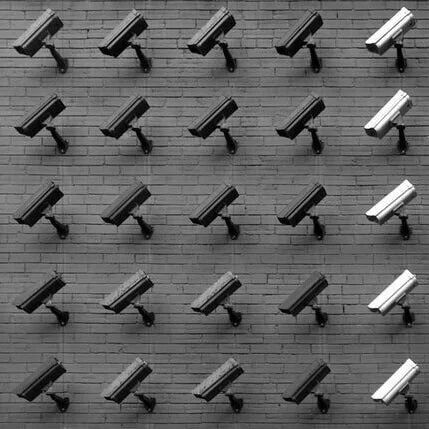
The tension between security and privacy...

lianhao-qu-LfaN1gswV5c-unsplash.jpg

The wisdom and madness of the crowd...

How to determine if a social media account is a bot...

The long game in marketing and advertising...

Dr. Sinan Aral is the David Austin Professor of Management and Professor, Information Technology and Marketing at MIT. He's a Phi Beta Kappa graduate of Northwestern University.

He has Master's degrees from the London School of Economics and Harvard University. And he has a PhD from MIT.

He recently published a book out called The Hype Machine: How Social Media Disrupts Our Elections, Our Economy, and Our Health--and How We Must Adapt.

In short, he is an expert in social media and its impact on society.

Good pod this.

Listen here.

Enjoy the ride + plan accordingly.

-Marc

Soft Power | Brigadoon Weekend

image.jpg

Brigadoon Weekend = Global Street Smarts
February 13, 2021


Soft Power

This edition of Brigadoon Weekend is soft power.

Joseph Nye coined the term soft power in the late 1980s.

Simply put, soft power is a nation's ability to persuade others to do what it wants without force or coercion.

Nye states the world's most successful nations need both hard and soft power -- the ability to coerce others as well as the ability to shape their long-term attitudes and preferences.

Nye initially set out three primary sources of soft power: political values, culture, and foreign policy.

Power in international relations traditionally has been assessed in the easily measurable metrics in inflexible terms - think military and economic might.

Soft power makes use of tactics that are often hard to measure, can take years to bear fruit, and aren't as sexy as a nuclear-powered aircraft carrier.

But today, soft power matters more than ever and shuns carrots and sticks. Soft power succeeds in building relationships, using communications and storytelling, operating under universal international rules, and harnessing a nation's unique resources that make a country attractive to the greater world.

The United States can undoubtedly dominate others through money and might, but America has excelled in using soft power.

From companies like Apple, foundations like Charity Water, universities like Stanford, to sports leagues like the National Basketball Association, America is a soft power hothouse.

When I read about the Thucydides Trap leading the US and China down a path to increased competition and possibly even war, I think no.

If the US can't succeed with Walt Disney World, Levi's, Tesla, Harvard, Serena Williams, Coca-Cola, Run DMC, Kelly Slater, and Detroit-style pizza, then what are we doing?

Sitting in London Heathrow a few years back, I was observing a family from Norway. The kids dressed in Under Armour, the parents were wearing smart casuals from the GAP, and the entire crew was teched-out in designed-in California Apple swag. It was the all-American family living in Oslo.

US culture and aspirations have been influential in helping the US government secure partners and enhance alliances.

Sure there are limits of soft power: it tends to have diffuse effects like jello, and sometimes it is not skillfully wielded to achieve specific outcomes.

However, US economic success and security hinges as much on winning hearts and minds as it does on winning wars.

Plus, with more of the world easily accessed by trans-continental flights and the internet, countries like Germany, Canada, South Korea, India, and China are all making use of the same tools and tactics to improve their strength and influence.

Game on.

SOFT POWER DEEP DIVE

The benefits of soft power: It is a central paradox of American power: The sheer might of the United States is unquestioned: US troops are stationed in some 130 countries around the globe, and no opposing army would dare to challenge it on a level playing field. But as America's military superiority has increased, its ability to persuade is at low ebb in many parts of the world, even among its oldest allies. In the following remarks, drawn from an address given on March 11, 2004, at the Center for Public Leadership's conference on "Misuses of Power: Causes and Corrections," Joseph S. Nye Jr., Dean [until June 30, 2004] of Harvard University's Kennedy School of Government distinguishes between hard power—the power to coerce—and soft—the power to attract.

Monocle's annual soft power survey judges which nations’ soft-power strengths make the grade. Top ten listed below and the full article here.

Top 10:

1. Germany

2. South Korea

3. France

4. Japan

5. Taiwan

6. Switzerland

7. New Zealand

8. Sweden

9. Greece

10. Canada

The growth of soft power in the world’s largest democracy: Isha Prakash writes, in a country with such a vast history as well as such rich culture, heritage, and traditions- the Government of India recognizes and acknowledges the soft power potential. Hence, with just a little effort- this can be utilized optimally to boost international influence.

Under the influence: Christopher Cermak writes isolationism has taken the shine off the perception of the US. But its foreign policy remains tightly interwoven with much of the world. As a new president takes office, what do its allies want?

Hollywood is running out of villains: Kal Raustiala writes what sets the United States apart from the rest of the world is and has always been its soft power. The Soviets may have equaled the Americans in nuclear capability, but they could never rival the appeal of the “American way of life.” And even as China tries to spread its culture across the globe, its rise tends to inspire more trepidation than admiration. Many ingredients combine to give U.S. soft power its strength and reach, but entertainment and culture have always been central to the mix. Film and television have shaped how the world sees the United States—and how it perceives the country’s adversaries. Yet that unique advantage seems to be slipping away. When it comes to some of the great questions of global power politics today, Hollywood has become remarkably timid. On some issues, it has gone silent altogether.

The world China wants: Rana Mitter writes does China want to transform the global order to advance its own interests and to reflect its own image? That may be the most important question in geopolitics today, yet the answers it elicits tend to reveal more about modern biases than they do about what a future Chinese superpower would look like.

Swiss flair: Megan Gibson writes, when it comes to money and diplomacy, Switzerland is an influential global player. But do other aspects of the national brand suit a broader international role? We asked seven of its best about what the future holds.

BRIGADOON WATCHES | SOFT POWER

Foreign Policy Association: Joseph Nye on soft power

TED Talk | Shashi Tharoor: Why nations should pursue "soft" power

Quartz: China's 'soft power' in Kenya

Gravitas Plus: How India can harness the soft power of Bollywood

Monocle: Soft power potential


BRIGADOON READS | BOOKS ON SOFT POWER

Soft Power: The Means To Success In World Politics by Joseph Nye

Why Nations Fail: The Origins of Power, Prosperity, and Poverty by Daron Acemoglu and James A. Robinson

The Big Stick: The Limits of Soft Power and the Necessity of Military Force by Eliot A. Cohen

Soft Power: The New Great Game for Global Dominance by Robert Winder

The World America Made by Robert Kagan


BRIGADOON EVENTS

Brigadoon February Call | INTRA-Preneurship
Errol Gerson| Adjunct Professor @ Art Center
February 17, 2021

Brigadoon Whiteboard Call | February 19, 2021

Brigadoon Whiteboard Call | February 26, 2021

Brigadoon Whiteboard Call | March 5, 2021

Brigadoon Whiteboard Call | March 12, 2021

Brigadoon March Call | Customers are the Disruptors
Dr. Leigh George | CEO @ Freedom
March 17, 2021

Brigadoon April Call | Less Logic. More Magic.
Rory Sutherland - Vice Chairman @ Ogilvy UK
April 21, 2021

Brigadoon May Call | The Poetry of Leadership
Fateme Banishoeib | heARTist + Founder @ ReNewBusiness
May 19, 2021

Brigadoon June Call | Adventures with Fiat Pandas + Autogrills + Negronis
Matt Hranek | Founder + Editor @ Wm Brown Magazine
June 16, 2021

More details and passes - click here.

Thanks for supporting Brigadoon. See you next week.

-Marc

Curation + commentary by Marc A. Ross | Founder @ Brigadoon

Brigadoon is always powerpoint free and conversation-driven for better insights and connections.

More @ 
thebrigadoon.com

Why be a Brigadoon Member?

+ Business intelligence
+ Extraordinary networking
+ Global street smarts
+ You'd be a great addition

_Brigadoon Weekend Jan 2021.png


Errol Gerson on being all in:

I have a life philosophy that has worked for me and for many of the thousands of students I have had the privilege of teaching over the past 48 years.

If you do 50% of one thing and 50% of another, you do 100% of neither.

Another way of understanding this is, 'The main thing is to make the main thing, the Main Thing.'

When you focus on being the best at what you 'think about most of the time,' you exemplify yourself, and you stick out 1/8th of an inch.

I had a student at Art Center who was a very talented Illustrator and a gifted musician and was torn between both.

I shared my life philosophy with him, and he chose music — and that young man was Mike Shinoda of the megaband Linkin Park.

He chose to do 100% of one thing and, along the way, became a member of one of the most successful bands worldwide.

Tomorrow begin focusing all your effort and attention on 100% of what makes you unique, and WRITE IT DOWN DAILY!

To hear this and other profound insights directly from him, please join a special Brigadoon Monthly call on Wednesday, February 17 @ 2:00 pm ET.

Full details below.

This call will do you right.

-Marc


Brigadoon February Call with Errol Gerson

Title: INTRA-Preneurship

Time + Date: 2:00 pm ET | Wednesday, February 17, 2021

Speaker: Errol Gerson| Adjunct Professor @ Art Center

Born and raised in Apartheid in South Africa, Errol Gerson left for the United States in 1966. Here, he received an MBA in Finance and Management and founded his own firm. Errol is a Professor at the Art Center College of Design. He’s been teaching Entrepreneurship, Leadership, and Business Management for almost half a century (and counting) and mentored over 6,300 students on success and effectiveness.


Errol Gerson has been a Board member and Advisor for the Los Angeles chapter of AIGA over the years. In 2017 he was awarded the AIGA Fellow Award for his immense contribution to the creative community.

Format:


Brigadoon Monthly Calls are 45-minute moderated discussions led by a subject matter expert in an emerging issue shaping commerce and culture.

The guest speaker makes opening remarks for ten minutes and takes questions for the balance of the call.

All calls happen using Google Meet.

Just like all Brigadoon gatherings, Brigadoon House Rules govern the session. The call is powerpoint free, the recording is private, and participants are free to use data from the discussion but are not allowed to reveal who made any comments or participated.

Cost:

Brigadoon Monthly Calls are free to all Brigadoon Members in good standing and their guests or $25.00 for other participants.

Sign Up Here
Brigadoon_Black.jpg