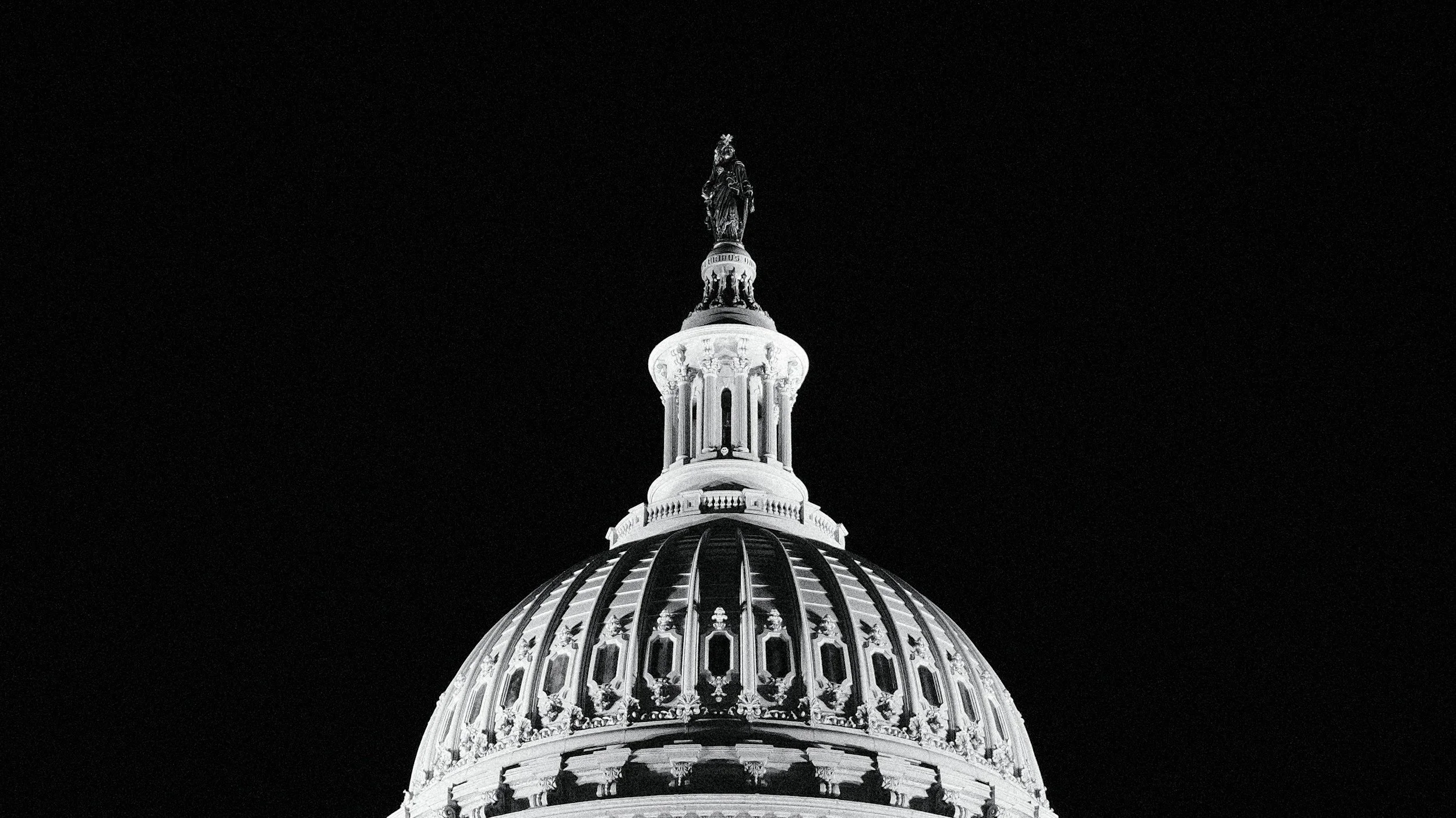
Iran.
Russia.
Tariffs.
Allies annoyed.
Harsh economy.
Being jerks.
The Vivek ad.
Not doing anything.
This week, voters read this list and fired Republicans from coast to coast, all across the fruited plain, even down to the Gulf of America.
Democrats won the House and the Senate, flipping seven Republican Senate seats so far: Kansas, Iowa, Texas, Ohio, Maine, North Carolina, and South Carolina. Adam Hamilton, a Methodist pastor, became the first Democrat to win a Kansas Senate race since 1932. In the Global Great Lakes, Amy Acton won the Ohio governorship and Abdul El-Sayed held Michigan's open Senate seat.
Jason Roe, a Republican strategist in Michigan, told The New York Times that Trump was "the engineer of the Republican collapse." The numbers back him. About 60% of voters tied high costs to Trump's policies. Drivers paid more than $4 a gallon on Election Day. Ron DeSantis warned that Republicans who wouldn't admit what the Iran war did to gas prices were "gaslighting" voters.
These results signal the close of an era. The political hinge of 2010, which paved the way for the Tea Party and laid the groundwork for Trump's MAGA coalition, finally appears ready to swing back.
What opens next is a harder question. Winning a campaign is one thing. Governing is another.
Democrats won on a no. No to $4 gas. No to the Iran war. No to tariffs. Now they have to say yes to something, with a majority that runs from a Kansas pastor to a Michigan progressive who campaigned on universal health care and taxing the rich.
They'll try it with Trump still holding the veto and broad power over tariffs and federal regulation. He says he'd rather strike deals than spend two years vetoing bills. I'll believe that when I see one. Expect little new law and plenty of subpoenas.
Subpoenas don't need the president's signature. Robert Garcia, set to chair House Oversight, greeted the win with two words: "Lawyer up." The Trump family is first in line. Business is next. Companies have already received letters from Democrats about donations to Trump's ballroom. Jamie Raskin has sought records on tariff exclusions.
Meanwhile, the clock has started. Control of the House, Senate, or White House has changed in 12 of the 14 elections since 2000, compared with 7 of 20 from 1960 to 1998. Voters keep firing whoever is in charge. Democrats just got hired on those terms.
Three things this means for leaders:
One, plan for both parties. Neither stays long. If your Washington strategy depends on one party's phone numbers, you have a contact list.
Two, review every promise you made to this White House. The ballroom check, the tariff exemption, the investment announcement staged in the Oval Office. Ask how each one reads at a witness table, then prepare yourself to answer for it.
Three, watch the governors. Texas holds about 27% of planned US data center capacity, and Gina Hinojosa vowed a moratorium on new data centers before she beat Greg Abbott. Jocelyn Benson called for a temporary ban in Michigan and won. Those promises were easy to make on the campaign trail. They become permits, lawsuits, and power bills in January.
This is where TWIN™, the audience framework I run with clients, comes in. Elections redraw the map of who matters. Your Targets to Win may now be incoming committee chairs and the staff who write their letters. Your Targets to Influence are the people those chairs trust. Your Targets to Neutralize are the ones who would like your name in a hearing title.
Ohio showed how it works. Vivek Ramaswamy ran an ad featuring Amy Acton's estranged mother. He pledged $4 million behind it and spent about $1 million before it was pulled from the air. Acton didn't have to carry the fight alone. Her brother answered. So did Gov. Mike DeWine, a Republican. So did alumni of Ramaswamy's own high school. The most credible people did the condemning. That’s a Targets to Influence strategy, whether her campaign called it one or not.
Reading the audiences is the job of TWIN. Reading the world they live in is SIGNAL™. Spreading the idea once both are clear is E-STOCK™.
How Brigadoon approaches the morning after
Brigadoon works with the individual, not the function. So we start with you.
Ask one question before the weekend: Who do I need to win, influence, and neutralize before the new Speaker gets the gavel in early January 2027?
The world has changed. Tariff volatility, supply chain disruption, NATO realignment, China competition, AI governance, export controls, the energy transition, and interest rate uncertainty are all reshaping how you are understood. Now add a new Congress. Most leaders treat communications as a way to explain a decision after it is made. The ones who win shape how that decision is understood before, during, and after.
Most leaders know what they are. Few reach their full potential.
Brigadoon gathers and advises the people who shape business and culture, with intelligence on what's emerging, a community of peers worth knowing, and campaign-tested strategy to help them execute.
Enjoy the ride + Plan accordingly.
-Marc
Marc A. Ross is Founder + Chief Campaign Strategist of Brigadoon.
Brigadoon works with leaders with ambition.
Be Your Ambition.
More @ brigadoon.live.