On Thursday, Rep. Alexandria Ocasio-Cortez (D-NY) boards a campaign bus in Michigan's Upper Peninsula with Abdul El-Sayed, the Democratic nominee for US Senate. The stops are Escanaba, Iron Mountain, and Marquette.
Two days earlier, President Donald Trump flew Air Force One to Joint Base Elmendorf-Richardson, took Marine One into Wasilla, Alaska, and spoke for nearly 90 minutes inside the Menard Sports Center. The arena seats about 3,500 for a concert.
Both trips are long. Both rooms are small.
The Upper Peninsula has roughly 300,000 people, about 3% of Michigan. Wasilla sits in a district Trump carried with more than 75% of the vote in 2024. Nobody flipped the Menard Sports Center on Tuesday.
So why make the trip?
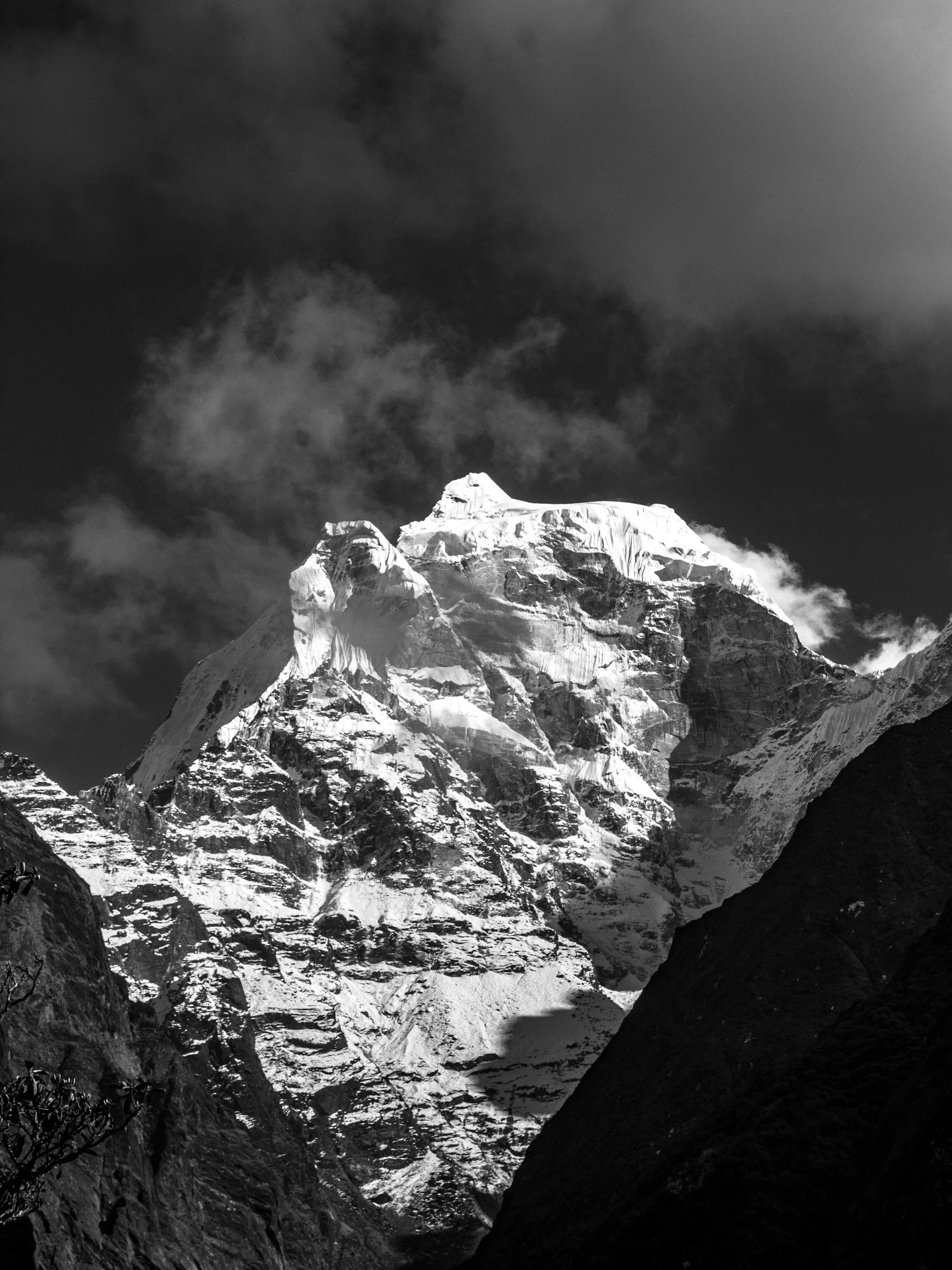
It reminds me of the Beatles in the summer of 1969. The working title for their next album was "Everest," named after engineer Geoff Emerick's cigarette brand. The plan was to charter a private jet to the Himalayas and shoot the cover in the foothills.
By then the band was exhausted and fractured, and nobody wanted to make the trip. Paul McCartney suggested they step outside EMI Studios instead. On August 8, 1969, photographer Iain Macmillan shot the four of them crossing the street in about ten minutes. The album became Abbey Road, and the zebra crossing became the most imitated album cover in history.
Getting attention.
Breaking patterns.
Or as the kids say today, "Do it for the Gram."
Both campaign trips share one thing: the audience isn't in the room.
Ocasio-Cortez told a New York fundraiser last week that if El-Sayed can win in Michigan, anybody can win anywhere. She has said she will decide on her next move after the midterms. A Bronx progressive on a bus in deer country, rallying against former Rep. Mike Rogers in Trump territory, is a photograph built for 2028 donors and primary voters. The few hundred people in Escanaba are the backdrop. The rest of the country is the audience.
Trump's math is different, but it rhymes. Sen. Dan Sullivan finished 8 points behind Democrat Mary Peltola in Alaska's August open primary, and the Cook Political Report rates the race a toss-up. The Senate majority may run through Anchorage. The headline from Wasilla was not the crowd. It was the onstage pardons for two Anchorage auto shop owners, a moment engineered to travel far beyond the Mat-Su Valley.
Three things this means for thought leaders:
First, the room is not the audience. Your plant tour in Saginaw, your panel in Davos, your ribbon cutting in Monterrey: each one is a picture before it is a meeting. Decide who the picture is for before you book the jet.
Second, distance only works when it carries an argument. Going somewhere unexpected says you showed up where nobody thought you would. That is worth something when it lines up with your thesis. Ocasio-Cortez's thesis is that progressive economics can win rural, working-class voters, so the bus in the UP is the argument in a single frame. If your trip does not argue something, it is tourism with a press release.
Third, the zebra crossing often beats Everest. The Beatles' most famous image came from the studio's front door. Thought leaders tend to overproduce: the summit, the stage, the curated site visit. The stronger move is usually closest to the work itself. Your factory floor. Your engineers. Your customers in their own kitchens.
How Brigadoon approaches the trip
When a client tells me they are heading to Washington, Brussels, Beijing, or a plant floor in the Global Great Lakes, my first question is never about logistics. It is about the picture.
That is why E-STOCK™, the framework I run with clients, starts with E. The Event is what the audience actually sees, so we decide it first, not last.
Strategy decides whether you need Everest or Abbey Road. Tactics are the bus, the jet, the onstage moment. Organization decides who carries the picture to the people who matter, because a photo nobody sees did not happen. Consistency separates a stunt from a pattern: one trip to Escanaba is a news cycle; a season of trips to unexpected places is a position. Know-how is what you say once you arrive, and most thought leaders prepare it last.
Skip any letter, and the event is an expensive day out.
Brigadoon works with the individual, not the function—the thought leader who has to walk into the room and be the sharpest voice in it. My job is to make sure the trip, the remarks, the interview, and the follow-up all argue the same thing, and that the right people see it.
TWIN's job is to read who the picture is really for. Reading the terrain you are traveling into is SIGNAL's job. Making the trip count once both are clear is the job of E-STOCK.
The world has changed. Tariff volatility, supply chain disruption, competition from China, AI governance, and interest rate uncertainty are reshaping how companies and the people who lead them are understood. The way you need to explain it has not. Most thought leaders treat communications as a tactic for explaining decisions after they are made. The thought leaders who win in this environment treat communications as a strategy that shapes an audience's understanding before, during, and after a decision, not just as an explanation after the fact.
Before your next big trip, ask one question: who is this picture for?
Most thought leaders know what they are. Few reach their full potential.
Brigadoon informs, connects, and manages the people shaping commerce and culture, keeping you sharp on what's next, grounded among people who think the way you do, and equipped with campaign-tested services built to push you toward your full potential.
More @ brigadoon.live.
Enjoy the ride + plan accordingly.
-Marc
Brigadoon | Be Your Ambition.