The View From the Edge

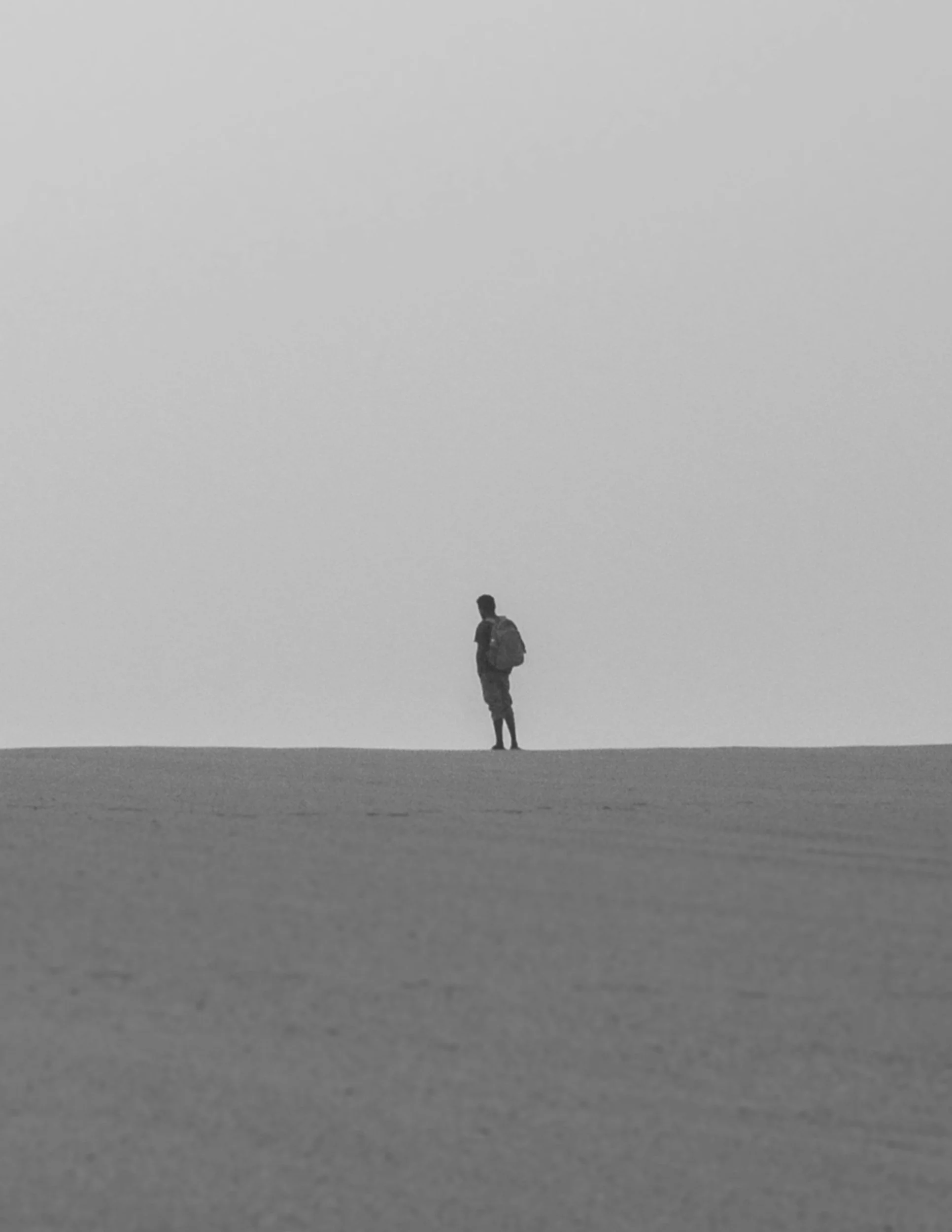
Kurt Vonnegut once said he wanted to stay as close to the edge as he could without going over. Out on the edge, he argued, you see things you simply cannot see from the center.

Lindsey Vonn built a career on exactly that. The greatest American ski racer in history found paths down the mountain that no one else could see, balancing the pull of the fall line against speed most competitors weren't willing to carry. Lewis Hamilton does the same on a grand prix circuit. His edge over other world-class drivers isn't raw speed. It's sensitivity. He operates closer to the limit of traction than anyone else, which means he carries momentum through corners that others have to surrender.

Both are doing the same thing: finding more by risking more, with enough control to stay on the right side of the line.

This isn't just an athletic phenomenon. IDEO, the design firm behind some of the most consequential product innovations of the past forty years, built a methodology around it. They call it "empathy on the edge." Their researchers deliberately seek out people living at the extremes of behavior, culture, and circumstance because that's where the future shows up first. As William Gibson put it, the future is already here; it just isn't evenly distributed yet.

The people and ideas at the fringes aren't outliers to be dismissed. They're early signals.

So here is what I keep coming back to: If the most important insights live at the edge, why do most organizations keep rewarding people for staying in the center?

-Marc

You can always reach me @ marc@brigadoon.live.

********

+ Brigadoon organizes gatherings for founders, investors, journalists, doctors, designers, architects, and civic leaders. No PowerPoints, no panels, no name tags. Just a deliberately varied group in conversation, with radical curiosity as the only agenda, and an honest acknowledgment that the ROI is unknown, and that is exactly the point. More @ www.brigadoon.live.

March 31, 2026


Who This Is For?

I'm going to be honest about something.

Brigadoon Professional is not for everyone.

I don't say that as a marketing device. I say it because the whole thing depends on who's in the room, and the room only works if the people in it are genuinely there for the right reasons.

So let me describe who it's for.

It's for the professional who has stopped finding the standard conference circuit useful — not because they've stopped being curious, but because their curiosity has outgrown it. The person who reads differently than most people in their field. Who finds themselves in conversations at dinner that are more interesting than anything happening on stage.

It's for the founder who understands that the most valuable intelligence they'll ever access doesn't come from a pitch deck or a panel discussion. It comes from a conversation with someone who has no reason to tell them anything other than the truth.

It's for the person who travels — who has sat in rooms in different countries and different industries and noticed that the most interesting things happen at the margins, in the unstructured moments, when people drop the performance.

It's not for the person who wants a credential to put in their bio. It's not for the person who needs a conference badge to justify the trip. It's not for the person who measures professional development by the number of sessions attended.

My work at Caracal Global has taken me across four continents, analyzing how power, commerce, and culture intersect in ways most people don't see coming. What I've learned — from boardrooms to art exhibits to political transitions — is that the most useful thinking happens between people who trust each other enough to say what they actually think.

Brigadoon is my attempt to build that trust deliberately and repeatedly. Brigadoon Professional is my attempt to extend it across twelve months, not just a weekend.

Four tiers. Biweekly analysis. Expert calls. Curated books. Guaranteed seats at the gatherings — Utah in February, Scotland in November, Salon Dinners in the cities.

Founding member pricing is locked for two years for participants who sign by March 31, 2026.

After that, the offer is what it is.

Small gatherings. Radical curiosity. No PowerPoint slides. An unknown ROI.

If that sounds like your kind of room, it probably is.

— Marc A. Ross

Founder, Brigadoon | marc@brigadoon.live

The ad nobody remembere

Pop quiz: Name the top Super Bowl ad from 2026.

You can't. Neither can I.

Budweiser won USA Today's 38th annual Ad Meter for Super Bowl LX (2026) with its commercial titled "American Icons". In case you forgot, like me, the ad featured the brand's signature Clydesdales alongside a soaring American bald eagle, set to the song "Free Bird" by Lynyrd Skynyrd.

This forgettable ad is the whole story.

Brand marketing was built for a world of mass broadcast — radio, television, billboards — where a handful of vehicles reached millions of people and repetition could lodge an idea inside a skull. Volvo means safety. Coke means happiness. It worked because the environment enabled it.

That environment is gone.

The internet was not built to sell ads. It was built for people, and people have rewired the communications environment to serve themselves. What cuts through now is funny, useful, beautiful, or inspiring content — preferably all four, delivered in ways that feel personal rather than broadcast. The research backs this up. So does common sense.

Most organizations have not caught up. They still communicate like it's a Sunday church service. Single message. Single emotion. Infrequent contact. They're running a brand marketing playbook inside a direct marketing world and wondering why nothing sticks.

The founders and leaders I respect most have figured out that surprise beats consistency, emotion beats fact, and useful beats sales. They've stopped trying to hammer a single idea and started telling stories worth repeating.

Which raises the question I keep returning to: If the brands spending the most on visibility are the ones we remember least, what does that tell us about where we're actually spending our own attention and credibility?

-Marc

You can always reach me @ marc@brigadoon.live.

+ Brigadoon organizes gatherings for founders, investors, journalists, doctors, designers, architects, and civic leaders. No PowerPoints, no panels, no name tags. Just a deliberately varied group in conversation, with radical curiosity as the only agenda, and an honest acknowledgment that the ROI is unknown, and that is exactly the point. More @ www.brigadoon.live.

March 30, 2026

What a Year Inside Brigadoon Actually Looks Like

I've been asked what Brigadoon Professional actually delivers — not in the abstract, but practically. What does a year look like?

Here's the honest answer.

Every two weeks, you receive a newsletter. Not a recap of things you already read on LinkedIn. Analysis — drawn from my work with Caracal Global on geopolitics, commerce, and culture — on the forces shaping the world in ways that most professional coverage misses. Twenty-six issues a year.

Ten times a year, you join a live call — forty-five minutes with a subject matter expert on something that matters: cybersecurity, behavioral economics, urban development, supply chain risk, creative leadership, whatever is most relevant to how the world is actually moving. Fully archived if you can't make it live.

Twice a year, if you're a Participant or above, you receive a curated hardcover book — one in June, one in December. Not the book everyone is talking about. The book that's actually worth your time.

Once a year, Brigadoon Utah. Three days in February at Sundance Mountain Resort. Forty or so people, Chatham House Rule, no slides, no panels, no posturing. You know what happens there. If you don't — that's the point of coming.

Once or twice a year, a Salon Dinner. Twelve people around a table in a city — Detroit, Washington D.C., wherever the community is gathering. Intimate by design. One of the highest-signal professional experiences I know how to create.

And for Explorers and Patrons: Brigadoon Scotland. Five days in November in a rented house in the Scottish countryside with a private chef and ten people. If I'm being honest, this is the most concentrated version of what Brigadoon is. No schedule. No sessions. Just five days where the conversation is the point.

What I've tried to do with Brigadoon Professional is create a rhythm — a year-long cadence that keeps you intellectually sharp, builds relationships that compound over time, and guarantees you a seat at the gatherings that actually move the needle.

The founding member offer closes March 31, 2026, and your tier pricing is locked for two years — no increases at renewal.

After March 31, pricing is what it is.

Four tiers. Twelve months. One conversation, extended.

If this is your kind of room, you already know it.

— Marc A. Ross

Founder, Brigadoon | marc@brigadoon.live