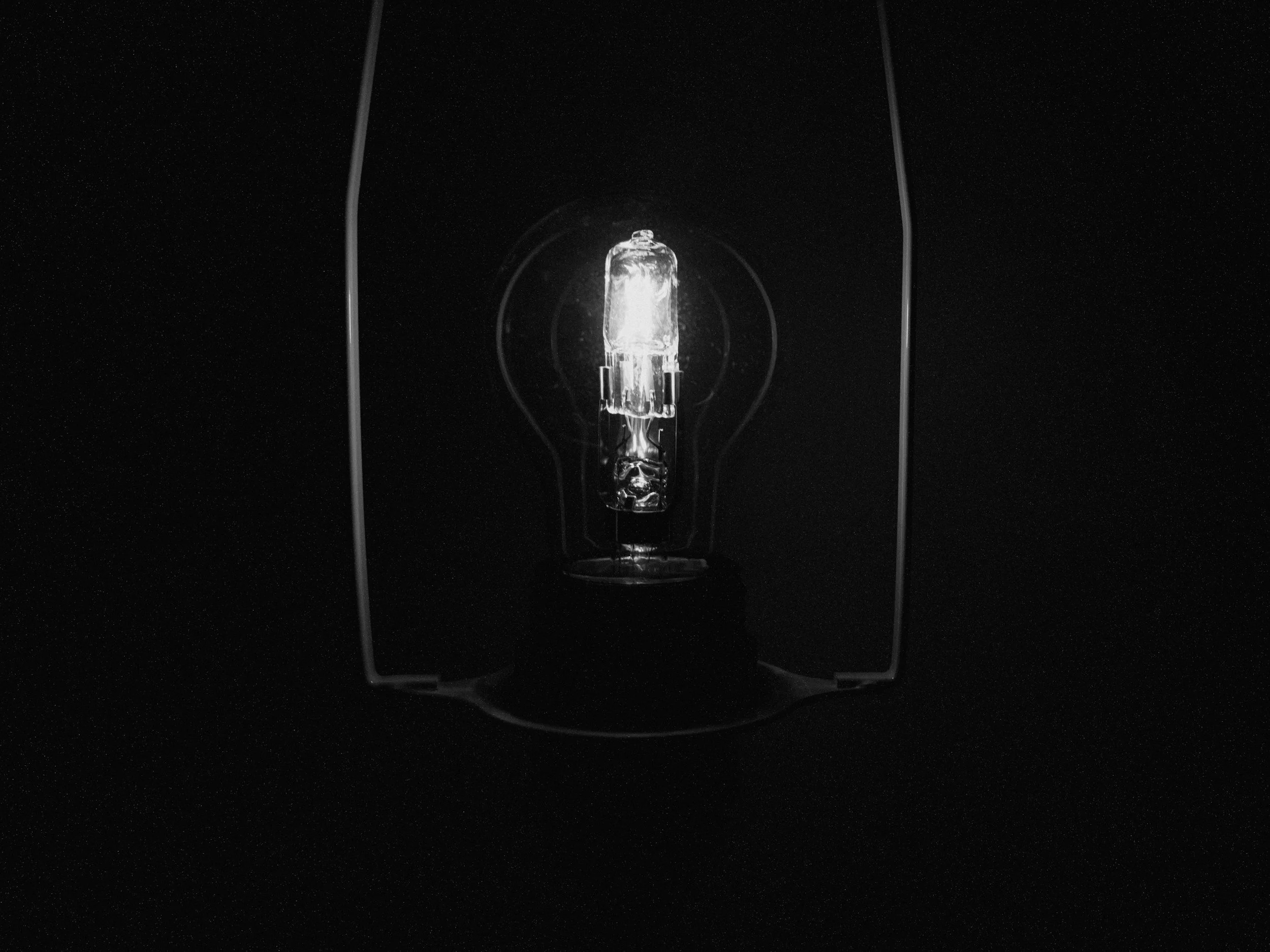
Awake But Absent

I used to think of sleep deprivation as a bill I could pay later. A rough night, a strong coffee, and you push through. Most of the people I know operate this way. It's practically a badge in the rooms where founders and global executives spend time together.

A study published in Nature Neuroscience has made me reconsider that math.

Researchers at MIT and Boston University tracked 26 healthy adults through attention tests, once after a full night of sleep and once after a supervised sleepless night. The interesting part wasn't the expected finding that tired people perform worse. It was what was happening inside the brain at the precise moment attention failed.

During sleep, waves of cerebrospinal fluid move through the brain, clearing metabolic waste. After a sleepless night, those same fluid surges started appearing while participants were still awake, and they corresponded directly with the moments attention broke down. The brain wasn't malfunctioning. It was doing maintenance it never got to do. It just happened while the person was supposed to be focused.

The researchers described it as a "sleeplike moment" inside a waking brain. The person is upright, eyes open, technically present. But for a brief interval, the brain has turned inward.

Most high performers I know have built systems for almost everything: decision frameworks, communication rituals, and recovery protocols. But sleep is often treated as a variable to be managed around rather than as a foundation to be protected.

If the brain is quietly retreating inward during the moments we most need it to engage outward, and we have no reliable way to detect when that's happening to us, what are we actually optimizing when we treat sleep as negotiable?

What would change about the way you structure your days if you accepted that your attention isn't fully yours to command?

-Marc

+ Brigadoon organizes gatherings for founders, investors, journalists, doctors, designers, architects, and civic leaders. No PowerPoints, no panels, no name tags. Just a deliberately varied group in conversation, with radical curiosity as the only agenda, and an honest acknowledgment that the ROI is unknown, and that is exactly the point. More @ www.brigadoon.live.

March 25, 2026

Why I Built This Room

I started Brigadoon in 2013 out of genuine frustration.

Not with any one conference. Not with any one industry. With all of it — the accumulated weight of too many rooms full of the same people, thinking the same way, saying the same things, and calling it professional development.

I'd spent years moving between boardrooms in New York and art exhibits in Singapore, watching how power, commerce, and culture intersect in ways most people don't see coming. And what I kept noticing was this: the most useful thinking never happened on stage. It happened in the margins. At dinner. On a walk. In the kind of conversation where someone drops their guard and says what they actually think.

That's what I wanted to build. Not another conference. A room.

Brigadoon has been that room for thirteen years now — a winter camp gathering at Sundance Mountain Resort, operating under Chatham House Rule, with no PowerPoint slides, no panels, no name tags, and no pretense. Just forty or so carefully selected founders, investors, journalists, civic leaders, designers, doctors, and thinkers who show up ready to think out loud.

The rules are minimal. The conversations are not.

What I didn't anticipate in 2013 was how much the gathering would mean to the people who kept coming back. Year after year, I'd hear the same thing: I'm still turning that conversation over in my head. The question is: how do you keep that going for twelve months, not just a weekend?

That question is what led me to Brigadoon Professional.

This is a twelve-month membership that keeps the conversation going between gatherings with biweekly essays and analysis, live expert calls, curated books, and guaranteed seats at the events that matter most.

I want to be clear about what it isn't. It isn't a content subscription. It isn't a networking platform. It isn't a community app with a Slack channel and a lot of noise.

It's a membership built on the same philosophy as the gathering itself: that the most valuable intelligence flows between people who trust each other enough to think out loud. Brigadoon Professional is an attempt to build that trust year-round — and to give members the intellectual fuel to show up sharper when they get back in the room.

Four tiers. Four levels of engagement. From a biweekly newsletter and expert call series at $500 a year, to a full-access membership — including Scotland, salon dinners, and a private Patron Dinner — at $7,500.

I've been deliberate about keeping capacity limited at the upper tiers, because the whole thing breaks down if the room gets too crowded. Exclusivity isn't a marketing device here. It's a design principle.

If you've been to Brigadoon, you know why.

If you haven't, and this sounds like your kind of room — that's probably worth paying attention to.

-Marc A. Ross

Founder @ Brigadoon

What Richie Learned Drying Forks

I've watched the "Forks" episode of The Bear just under a dozen times. I'm not entirely sure what that says about me, but I suspect it says something.

For those who haven't seen it: Richie, a volatile and largely rudderless man, gets sent to stage at a three-Michelin-star restaurant as a kind of punishment. His assignment is to dry forks. He is furious. He is humiliated. And then, slowly, something shifts. He stops trying to dominate the room and starts trying to understand it. By the end of the episode, he has found something he didn't know he was looking for.

HBO's new series Rooster, from the creators of Ted Lasso and Shrinking, appears to be operating in the same territory. Steve Carell plays a celebrated novelist who arrives to rescue his daughter and ends up, predictably, needing rescuing himself. The premise is almost beside the point. What matters is what the show is actually about: a man whose carefully constructed identity turns out to be negotiable.

This is a pattern now. Ted Lasso. Richie and his forks. Whatever Carell's character is working through in Rooster. Television has quietly retired the angry genius archetype that defined prestige drama for twenty years. Don Draper is not coming back. Gregory House is not coming back. The brilliant, caustic, fundamentally furious man as protagonist has given way to something quieter and, frankly, harder to write: men doing the interior work.

The easy read is that this is culture softening. I don't think that's right. What I see is something more interesting: a willingness to let male characters fail without swagger, grow without conquest narratives, and sit with discomfort without immediately trying to solve or escape it. That's not softness. That's a different kind of difficulty.

Whether television is reflecting or modeling a cultural shift is unclear to me. Probably both. But I find myself thinking about what this means outside the screen, in the rooms where actual decisions get made. Boardrooms. Founding teams. Investment committees. The professional cultures most of us inhabit were built on versions of the Don Draper model, even when we would never say so out loud. Competence is performed as dominance. Uncertainty is treated as a weakness. Identity as a fixed and defended position rather than a thing that is, as it turns out, negotiable.

If the stories a culture tells itself matter, and I believe they do, then something is being proposed here. Not a replacement for ambition or rigor, but a different relationship to the self doing the work.

Which brings me to the question I can't stop turning over: If the most compelling version of leadership is no longer the man who dominates the room but the one who is willing to be changed by it, what does that ask of the institutions and cultures we've spent the last twenty years building?

-Marc

+ Brigadoon organizes gatherings for founders, investors, journalists, doctors, designers, architects, and civic leaders. No PowerPoints, no panels, no name tags. Just a deliberately varied group in conversation, with radical curiosity as the only agenda, and an honest acknowledgment that the ROI is unknown, and that is exactly the point. More @ www.brigadoon.live.

March 24, 2026

Staying Quiet Is a Risk

I started Brigadoon in 2013 because I was bored.

Not personally. Living and working in Washington, DC, I was fortunate enough to be surrounded by interesting people doing interesting things. I was bored by the conferences, the panels, the stage-managed conversations that produced nothing you couldn't have found in a decent book, heard on a podcast, or gleaned from a magazine article.

I was bored by the posturing. I wanted something real.

So I built it.

Small gatherings. Off the record. No PowerPoint. No name tags. No one is selling anything.

Founders, investors, entrepreneurs, journalists, authors, doctors, civic leaders — people who don't normally share a room — talking honestly about the things that actually matter to them. Brigadoon has been running for thirteen years. The philosophy is intact. The format works. The community is loyal and, by any reasonable measure, remarkable.

And yet, it is at an inflection point.

Brigadoon 2026 brought 38 people to Sundance Mountain Resort for three days of some of the best conversation I have had in years. I left energized. I also left knowing that 38 is not the number. Not because the experience was diminished — it wasn't — but because the mission requires scale to survive. Forty-six attendees is break-even. Seventy-five is where Brigadoon becomes genuinely sustainable, where it can fund scholarships, expand the Scotland experience, build the salon dinner series, and launch the professional membership program now in development.

Seventy-five is where the thing I built becomes the thing I intended to build.

The gap between 38 and 75 is not a product problem. I am confident in that. The people who come to Brigadoon come back. They describe it, years later, as one of the more valuable professional experiences they have had.

The gap is a communication problem — a decade of deliberate restraint that has kept Brigadoon safe from the noise it was designed to resist, but has also kept it invisible to the people who would value it most. I have underinvested in telling this story. I have been too precious.

That is on me.

The tension I keep returning to is this: Brigadoon's value is inseparable from its restraint. The reason it works is precisely that it does not behave like everything else competing for your attention. The moment it starts performing — the moment the marketing starts to feel like marketing — something breaks. Growth cannot come at the cost of what makes growth worth pursuing.

But staying quiet at 38 attendees is its own kind of failure.

The world is getting noisier. Attention is getting cheaper. The case for a room where serious people can think seriously, without an agenda or a slide deck, is stronger now than it was in 2013. That story deserves to be told.

I just haven't figured out how to tell it without turning it into something it isn't.

So here is what I find myself sitting with: How do you build real awareness for something whose value depends on never feeling like it needs to be marketed?

-Marc

+ Brigadoon organizes gatherings for founders, investors, journalists, doctors, designers, architects, and civic leaders. No PowerPoints, no panels, no name tags. Just a deliberately varied group in conversation, with radical curiosity as the only agenda, and an honest acknowledgment that the ROI is unknown, and that is exactly the point. More @ www.brigadoon.live.

March 23, 2026