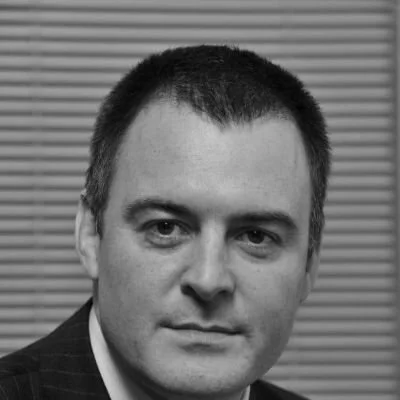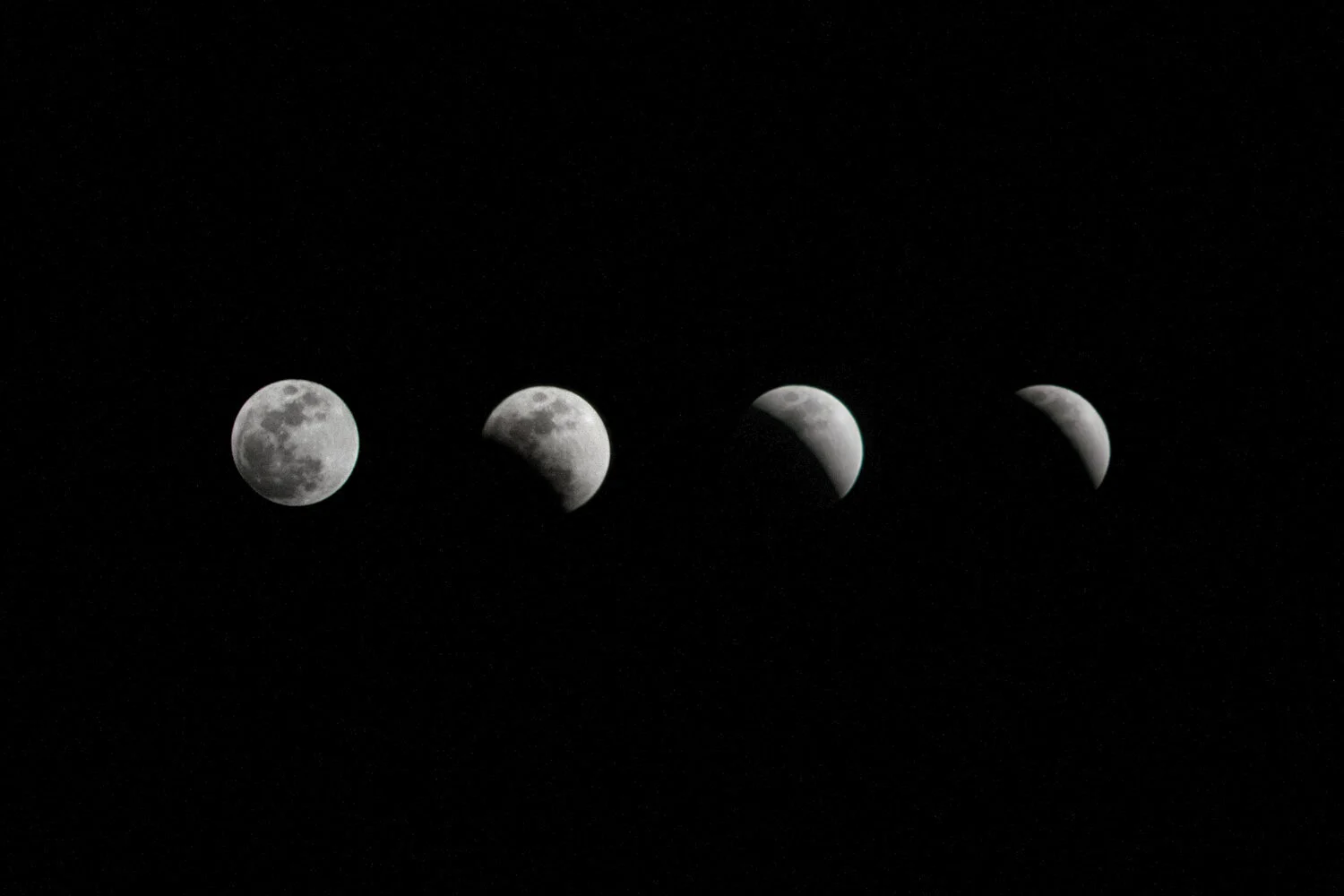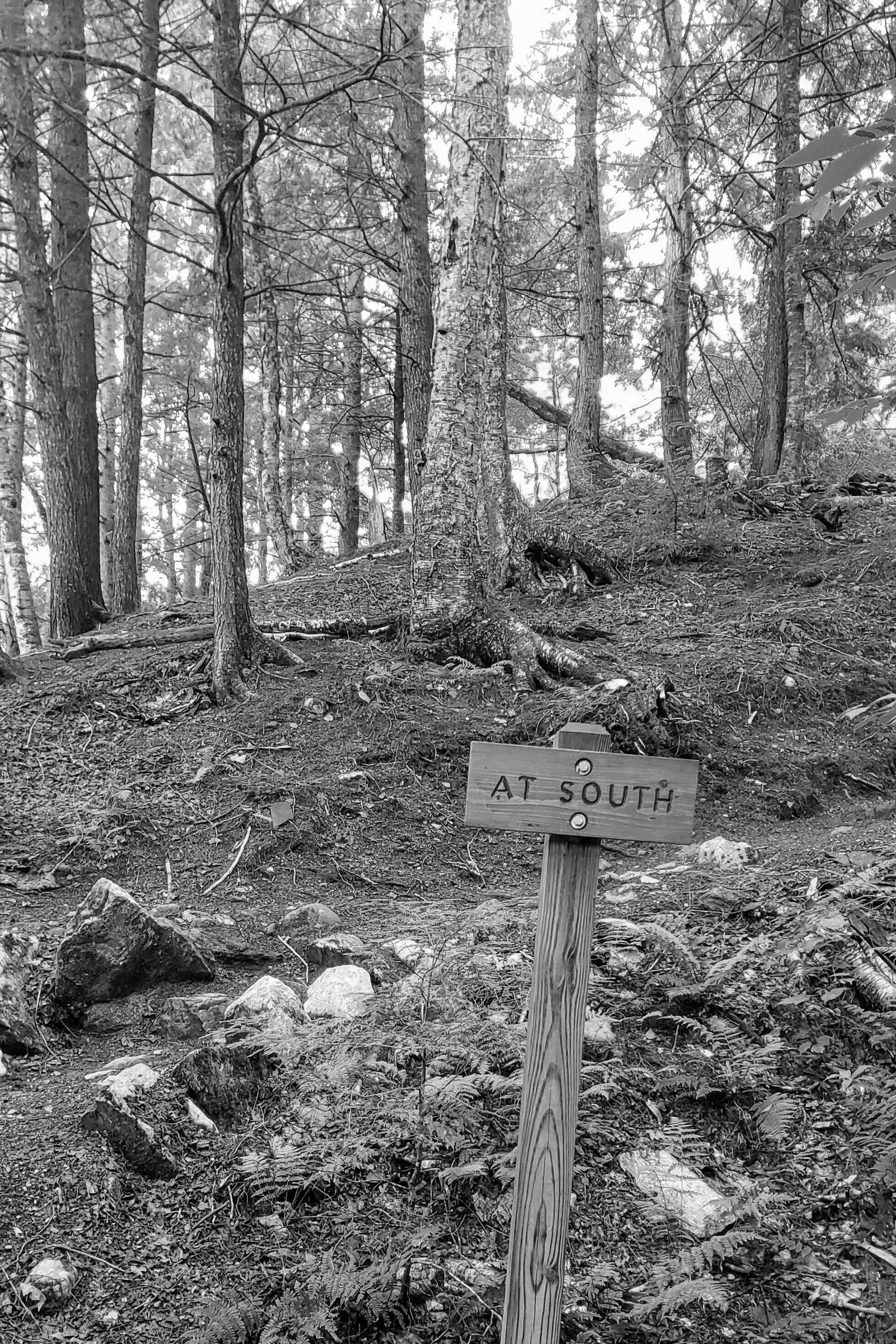
Good pod this: Chris Fussell speaks with Sean DeLaney

The pod covers much ground, including:

Fussell's 15 years with the US Navy SEALs and his work at the McChrystal Group Leadership Institute...

His experience as Aide-de-Camp to Lieutenant General Stanley McChrystal during McChrystal’s final year commanding a Joint Special Operations Task Force fighting Al Qaeda around the globe...

Insights on his book, One Mission: How Leaders Build a Team of Teams...

What it is like to teach at Yale University’s Jackson Institute...

Chris was commissioned as an Officer in the United States Navy in 1997, and spent the next 15 years on US Navy SEAL Teams, leading SEAL elements in combat zones around the globe. From war-torn Kosovo, to counter-terrorism operations in Iraq and Afghanistan, to highly specialized efforts in the troubled areas of the Arabian Peninsula and North Africa, he experienced and led through the modern evolution of the US military’s Special Operations community, first on SEAL Teams Two and Eight, then in the Naval Special Warfare Development Group.

Chris was selected to serve as Aide-de-Camp to then-Lieutenant General Stanley McChrystal during General McChrystal’s final year commanding the Joint Special Operations Command (JSOC), where they served for a year together in Iraq. He witnessed first-hand the Special Operations community’s transformation into a successful, agile network.

Chris is also a Senior Fellow for National Security at New America, a Washington, DC-based non-partisan think tank dedicated to understanding the next generation of challenges facing the United States. Chris is actively involved in several non-profits dedicated to helping veterans and their families, and holds a seat on the Board of Directors for the Navy SEAL Foundation. He is also a lifetime member to the Council on Foreign Relations.

Chris earned a Master of Arts in Irregular Warfare from the Naval Postgraduate School, receiving the Pat Tillman Award for highest peer-rated Special Operations Officer in the program. His thesis work focused on the interagency collaboration and intelligence sharing processes that drove effective, cross-silo collaboration during the peak of the wars in Iraq and Afghanistan.

Good pod this.

Listen here.

Why do things go wrong in organizations?

Why do things go wrong in organizations?

Easy question.

Hard answer?

Or is it a hard question and easy answer?

Christian Hunt has some thoughts.

Christian has over 25 years of experience in financial services, working in investment banking, asset management, and a family office.

Serious dude.

He benefits from the unique perspective of having held senior roles as both a regulator and risk + compliance officer.

Plus he was Managing Director & Head of Behavioural Science at UBS, a role created specifically for him.

Told you, serious dude.

Only space for 20 enrollees.

The cost is $45.00.

The session is 45 minutes starting at 2:00 pm ET on Wednesday, August 18, 2021.

You in?

Ticket Here
77627d39-51ad-86e4-7ff9-2fe49106227d.jpeg

Think STOCK. Do STOCK. | Brigadoon Weekend

image-asset (2).jpeg

Think STOCK. Do STOCK.

Communications is the spreading of an idea.

STOCK is the process for the spreading of an idea.

STOCK = Strategy, Tactics, Organization, Consistency, and Know-how.

This is a model I use for clients and my projects.

I hope this framework gives you the structure to drop a new idea into the world.

Strategy

"Strategy is an idea that describes a journey to a position of advantage." -- Blair Enns

"Strategy is the answer to the question, 'How are we going to become and remain unique?" -- Michael Porter

Your strategy should be easily summable into an idea.

From the idea, you should be able to infer some essential steps which will propel the business.

The ultimate aim of strategy is a position of advantage in the market space.

Also, there is a difference between a business strategy and a brand strategy.

A business strategy is about making the organization unique.

A brand strategy is the same idea applied to a brand. There's a distinction between the two only when one business owns multiple brands.

Plus, a one-brand business does not need a "brand strategy." It needs a communication and/or marketing plan.

P&G and GM need brand strategies. You are probably not P&G or GM.

Tactics

What are the tools, tactics, platforms, events, and methods, etc. which we going to use to execute our strategy?

Tactics are tools - things you do to win customers, win in the market space.

Repeat, tactics are tools.

If you start using tools/tactics without a clear strategy, who knows where you will end up.

Organization

What are the systems, what is the process, who is on the team?

Who is responsible for what?

Who is doing what when?

Answering these questions is all about employing solid organization.

Consistency

Can you form a habit with your customers?

Can you create an environment where they expect, demand, need your service?

Developing and executing a predictable editorial calendar that takes advantage of the calendar happenings, cultural activities/engagements, and natural inflection points are wonderful for communications and marketing.

Know-how

What expertise, knowledge, insights, humanity, behind the scenes are you sharing and providing to your network, customers, and market space?

Adam Grant posted this on Twitter recently:

Creating knowledge without sharing it is elitism.

Sharing knowledge without creating it is marketing.

Creating knowledge to share it is thought leadership.

That is a pretty good explanation of thought leadership and know-how.

What idea are you holding back?

-Marc


WHAT BRIGADOON IS WATCHING THIS WEEKEND

Renting clothes is ‘less green than throwing them away’: Transportation and dry cleaning make it the worst green option for consumers of fashion, study finds.
Guardian

Should we "nudge nature" to help animals save themselves? What should we do when animals can't adapt to meet the challenges we present?
Marc Bekoff Ph.D.

Copenhagenize your city: The case for urban cycling in 12 graphs: Danish-Canadian urban designer Mikael Colville-Andersen busts some common myths and shows how the bicycle has the potential to transform cities around the world.
Guardian

What if everyone’s nutrition was personalized? How the mass adoption of personalized nutrition is changing people’s health—and the food industry. An imagined scenario from 2035.
Economist

The race to scale up green hydrogen: Long heralded as an alternative to fossil fuels, can the gas really help solve the world’s dirtiest energy problems?
FT

Like this content? Become a Brigadoon Member starting at just $150 a month and get 45+ articles, news reports, surveys, and insights like this 5x week.

Plus:

  • A discount for you and a plus one to all Brigadoon events, workshops, remotes, retreats, and salon dinners

  • Delivered monthly, one highly curated book on leadership, performance, marketing, or public affairs

  • A quarterly deck covering emerging issues, business model disruption, globalization, or behavioral economics

  • Access to a global network of entrepreneurs and thought leaders to test ideas and engage a private audience

Join here for as low as $150 a month, and for peace of mind, you cancel whenever you get bored or find the membership trite.


Thanks for supporting Brigadoon. See you next week.

-Marc

Curation + commentary by Marc A. Ross | Founder + Chief Curator @ Brigadoon

Brigadoon is Global Street Smarts

More @ 
thebrigadoon.com

I hiked the Appalachian Trail | Brigadoon Weekend

20210701_083330.jpg

I hiked the Appalachian Trail

Well, one mile of the Appalachian Trail.

Running from Georgia to Maine, the complete Appalachian Trail is roughly 2,190 miles.

So if I only hiked one mile of 2,190, can I really say I hiked the Appalachian Trail?

Distance, length, measurement, commitment, and time all matter when it comes to accomplishments and achievements.

But are these the best metrics to denote the spirit of travel, exploration, adventure?

Richard Branson and Jeff Bezos are set to blast themselves into space in the coming weeks.

But what exactly is the boundary of space?

Branson's Virgin Galactic is set to fly above 80 kilometers (or about 262,00 feet), which is the altitude the US recognizes as the boundary of space. In comparison, Bezos' Blue Origin flies above 100 kilometers (or about 328,000 feet), which is commonly known as the Kármán Line.

In the ultimate tin ear and failure to read the room move, Bezos's Blue Origin has dismissed Virgin Galactic's rocket-powered spacecraft as nothing more than a "high altitude airplane."

So the current status of the Branson / Bezos space race is down to, "That's not a rocket, that's an airplane."

Plus, "There's no sort of real international agreement" on the boundary of space, astrophysicist Jonathan McDowell told CNBC, and his research argues that 80 kilometers is the most precise distinction.

Nevertheless, Blue Origin doubled down on its Kármán line view on the best tool for such things, Twitter.

"For 96% of the world's population, space begins 100 km up," the company said.

Okay, so let's agree that there is no agreement on where space is.

What about time?

The entire Blue Origin flight will be eleven minutes from reports, with just 30 seconds of that in space. The Virgin Galactic flight will take around 90 minutes, but I haven't found anything on the amount of time in space.

For context, the International Space Station is flying 399 kilometers above Earth.

Plus, the station has an international crew of six people who live and work while traveling at a speed of five miles per second, orbiting Earth about every 90 minutes.

So, in 24 hours, the space station makes 16 orbits of Earth, traveling through 16 sunrises and sunsets.

That seems like space to me.

However, the Travelers' Century Club (TCC) approach probably makes the most sense as a tool to best denote the spirit of travel, exploration, and adventure.

The TCC is a club for people who have visited 100 or more of the world's countries and territories.

The club has no requirements for how long the traveler must have stayed in a country to qualify. Anyone who has visited 100 or more of the world's countries and territories is eligible to join.

This seems to be the best measurement of travel, exploration, adventure. One must have presence.

Presence.

Presence is defined as the state or fact of existing, occurring, or being present in a place or thing.

In his must-read book On Trails, Robert Moor penned this about his thru-hike experience on the Appalachian Trail: "One of the chief pleasures of the trail is that it is a rigidly bounded experience. Every morning, the hiker's options are reduced to two: walk or quit."

Presence.

When Benton MacKaye envisioned the Appalachian Trail at the age of 21 while hiking the Green Mountains of Vermont, he saw a single trail connecting the entire Appalachian range from north to south across fourteen states.

MacKaye's trail had a bold vision to combat the jazz-loving and picnic-eating city dwellers.

The trial MacKaye concluded was "to organize a Barbarian mission" as a means to counter the Metropolitan invasion. The source of modern malaise, he believed, was civilized people who were no longer equipped to survive in nature. People need to get "back to the land," MacKaye wrote.

By 1971, when an interviewer asked him to state the Appalachian Trail's "ultimate purpose," MacKaye, then ninety-two and nearly blind, had whittled down his answer to Zen simplicity:

To walk

To see, and

To see what you see!

So if you have a chance to speed into whatever you think space is, visit a new country or territory, and hike one mile or 2,190 miles, the only metric that matters is presence.

-Marc

20210701_082454.jpg
20210701_082438.jpg

WHAT BRIGADOON IS WATCHING THIS WEEKEND

Flying cars will be a reality by 2030, says Hyundai’s Europe chief: Michael Cole says urban air mobility could free up congestion and help with emissions in cities.
Guardian

Is it a bird? Is it a plane? No, it’s an electric sky taxi! The high-stakes race to provide the world’s first flying car has reached a fever pitch, but has also sparked allegations of dirty tricks.
The Times

Is ‘bleisure’ the future of business travel? Once the preserve of tech-industry freelancers, the blending of work and leisure travel is becoming increasingly mainstream.
Toby Skinner - FT

7 ways COVID has changed our world: The pandemic, and our reemergence from it, are reshaping the economy, government, and business in lasting ways. The Journal’s Heard on the Street team explores the ways the globe is transforming.
WSJ

Mbappé, culture, and the superstar curse: Why France lost on penalties – and why it may happen again.
Ben Lyttleton

Cycling is spreadsheets. Tennis is sitting down. I don’t need VAR to tell me football is the winner
Jeremy Clarkson - The Times

Naomi Osaka is talking to the media again, but on her own terms: The tennis superstar is guest-editing Racquet magazine and has written a cover essay for Time. What’s left for traditional sports journalism?
NYT

Like this content? Become a Brigadoon Member starting at just $150 a month and get 45+ articles, news reports, surveys, and insights like this 5x week.

Plus:

  • A discount for you and a plus one to all Brigadoon events, workshops, remotes, retreats, and salon dinners

  • Delivered monthly, one highly curated book on leadership, performance, marketing, or public affairs

  • A quarterly deck covering emerging issues, business model disruption, globalization, or behavioral economics

  • Access to a global network of entrepreneurs and thought leaders to test ideas and engage a private audience

Join here for as low as $150 a month, and for peace of mind, you cancel whenever you get bored or find the membership trite.


Thanks for supporting Brigadoon. See you next week.

-Marc

Curation + commentary by Marc A. Ross | Founder + Chief Curator @ Brigadoon

Brigadoon is Global Street Smarts

More @ 
thebrigadoon.com