Who are you competing with? | Brigadoon Weekend

c93fa02f-6e25-8a93-9a39-63c94da609b6.jpg

Who are you competing with?

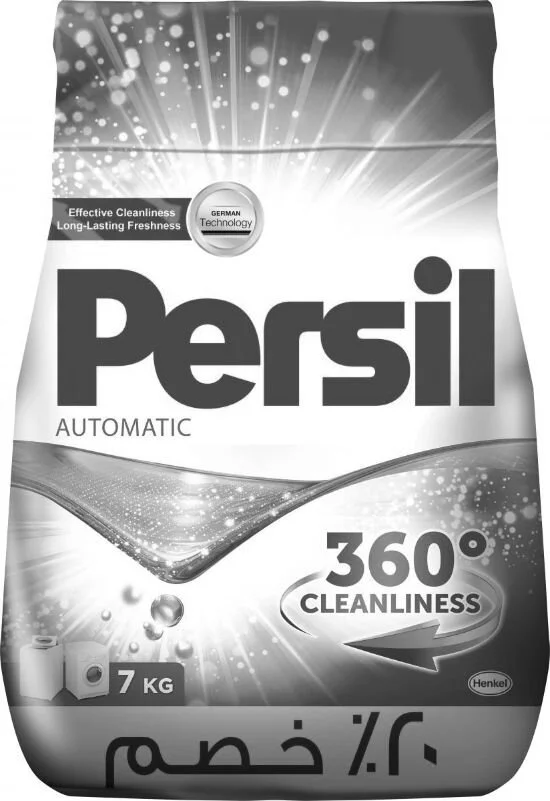
“I want to be as famous as Persil Automatic.” -- Victoria Beckham

I picked up this nugget from Paul Arden.

As a teenager, he informs his readers that Victoria Beckham’s ambition was not just to be better than her mates or even a famous singer but to become a world brand.

“She not only dreamed about it but wanted it enough to go about getting it. That in itself makes her different from most of us.

"It’s not how good she was that mattered; it’s how good she wanted to be.

"What is interesting in her quote is that she didn’t compare herself with George Michael or Mariah Carey; rather, she saw the fame of Persil Automatic as her yardstick.”

She wasn’t competing with musicians, pop stars, dancers, and entertainers.

Her competition was finding a way to be a part of the end user’s everyday life.

You see, Persil Automatic is a laundry detergent.

A highly useful product. One that solves problems. Something that is top of mind for the consumer.

Such an original imagination powered her success.

Tucker Max speaking with James Altucher on a pod, reminded listeners that TV networks used to only compete with other TV networks.

Now they compete with every single person online.

CNN Worldwide boss Jeff Zucker competes with Twitter for breaking news.

Stephen B. Burke of Comcast competes with my cousin for entertainment.

The NFL competes with the Call of Duty World League for viewers and for players.

Bloomberg News, staffed by 2,300 editors and reporters in 72 countries, competes with Matt Drudge staffed by an internet connection in one city.

There’s more content being made today than ever before.

There’s more competition than ever before.

It’s just that I am not competing with you.

We are moving into a business environment where going small, going local, going tribal is happening again.

A business environment where you can be small-scale and matter.

A business environment where you can be small-scale and prosper from the benefits of mass-scale production and administration.

The days of mass are gone.

Today it is all about niche is rich.

You can be Porsche, or you can be Toyota.

You can be Southern Seasons, or you can be Publix.

Frankly, tiny is where humans work and operate better.

It’s a business environment where our customers keep us top of mind and automatic.

-Marc
c8d6efd2-a274-d4f3-f8d6-49c955688b23.jpg

WHAT BRIGADOON IS WATCHING THIS WEEKEND

Only one in six payments in the UK is made in cash now, down from over half a decade ago.

Geothermal: Global geothermal power capacity was north of 14 gigawatts at the end of last year, up 40 percent over the past decade. There’s increasing demand for the form of electrical generation from places in Indonesia and eastern Africa, and lots of the companies that design and install utility-scale geothermal are Japanese: Mitsubishi Heavy Industries, Toshiba Energy Systems, and Toyota Tsusho are huge players in the geothermal space, with Japanese corporations holding over a 60 percent share in geothermal turbines.

How Japan’s big bet on hydrogen could revolutionize the energy market: The country’s effort to be carbon-free by 2050 relies on a fuel source many see as too expensive and unrealistic.
WSJ

+ General Motors Co. and Wabtec Corp. have signed a nonbinding agreement to build locomotive engines using the automaker’s Ultium electric battery and its Hydrotec hydrogen fuel-cell system

+ Hydrogen fuel cell Land Rover Defender in the works


Thinner mints: Girl Scouts have millions of unsold cookies: AP reports the Girl Scouts have an unusual problem this year: 15 million boxes of unsold cookies. The 109-year-old organization says the coronavirus — not thinner demand for Thin Mints — is the main culprit. As the pandemic wore into the spring selling season, many troops nixed their traditional cookie booths for safety reasons.

The bottlenecks which could constrain emission cuts: The green revolution risks running short of minerals, money, and places to build.
Economist

+ Two-thirds of humankind now lives in countries where wind and solar power offer the cheapest new electrical-generating capacity

+ Annual clean-energy investment, already at an all-time high, would have to exceed $4trn by 2030, three times its average over the past five years. And the market for key minerals needed to build clean-energy kit would expand nearly seven-fold


YouGov: By what age do you think you will have saved enough to retire comfortably, should you want to?

+ 18% think they'll have enough saved before they turn 60

+ 13% think they'll have enough saved when they are 65

+ 9% think they'll be older than 70 by the time they have enough saved to retire

+ 14% of Americans say they don't think they will ever be able to retire


Like this content? Become a Brigadoon Member starting at just $50 a month and get 45+ articles, news reports, surveys, and insights like this 5x week.

Join here for as low as $50 a month, and for peace of mind, you cancel whenever you get bored or find the membership trite.


Thanks for supporting Brigadoon. See you next week.

-Marc

Curation + commentary by Marc A. Ross | Founder + Chief Curator @ Brigadoon

Brigadoon is Global Street Smarts

More @ 
thebrigadoon.com

How walking became a radical act during lockdown

FT reports hitting the streets every day didn't just help Lou Stoppard get through the pandemic, it changed her sense of self.

"Walking is a simple way of proving to myself and others that I intend to take my time, to move at my own tempo, not the tempo of the city. To walk is to reject falling in step with the crowd, shepherded unwittingly to keep up, keep up. It is a small way of rejecting the rush."

31279284994_af28404a39_w.jpg

What's the ROI?

unnamed (9).jpg

Famously Steve Jobs was once asked at an Apple shareholder meeting by a shareholder who wanted to get some insights into his most in-depth thinking: "What keeps you awake at night?" Jobs replied, "Shareholder meetings."

Can you envision Jobs in a shareholder meeting being bogged down by endless questions all focused on ROI?

Tim Cook, Apple's current CEO, maintains this ethos today.

At a shareholder meeting a few years back, an investor was looking for more transparency.

Apple is committed to source its power needs from renewable energies, something this investor didn't see as the best ROI for its money.

Cook's response was to reinforce that his company does "a lot of things for reasons besides profit motive" and that "we want to leave the world better than we found it."

Allegedly Cook went on to say, "If you want me to do things only for ROI reasons, you should get out of this stock."

I don't have fancy shareholder meetings, but I do have sales meetings.

Sales meetings where the question of what is the ROI for someone attending a Brigadoon gathering usually comes up.

The exchange usually proceeds down this path:

Question to me: "What's the ROI of me attending a Brigadoon event?"

Response from me: "I have no idea."

Question to me: "Will the people in the room buy my product?"

Response from me: "I have no idea."

These two responses are usually less than satisfying to the person posing the questions.

There is usually silence as well. Plus, the questioner is generally puzzled, perplexed, and many times perturbed.

Being shaped by a consumer environment where the customer is always right, hand-holding is demanded, and orange slices for everyone, such cavalier responses from a seller can be unsettling.

After this, how does this conversation move forward moment?

This is how I usually respond:

"If you are interested in having conversations with compelling entrepreneurs and thought leaders in dynamic settings, Brigadoon is probably for you. The ROI of Brigadoon is up to you on how you use the conversations and settings to enhance your business, mental health, investments, and performance. If you need a clear, from the start ROI, Brigadoon is probably not for you."

From my observation, those Brigadoon attendees that are free from seeking a calculated ROI from the start have the best experiences and leave the gatherings smarter and more energized. Not having a predictable and repeatable ROI for Brigadoon works because the result is divergent and distinctive for each attendee.

It's tempting for those who sell a product to obsess about providing secure, measurable, and help me explain to my boss the outcome for a customer.

It's tempting to make it easy, black and white, and predictable for customers - it is called industrialization.

It's the difference between dining with Ronald McDonald and Grant Achatz.

Ronald McDonald spends all his time delivering value meals, predictable experiences, and repeatable french fries.

Grant Achatz spends all his time delivering expensive meals, unpredictable experiences, and unrepeatable french fries.

The market rewards the industrialist with short-term accolades followed by a relentless need for ever more of the same growth and productivity that got them awards in the first place.

Today's industrialists define our economy, secure the headlines, get interviewed on CNBC, and win awards from magazines, but they offer very little excitement for tomorrow. Their work makes it easy, black and white, and predictable for customers. It's industrialization.

Some products, services, and outcomes must be designed from the start to alter the culture, eschew ROI, and operate in ways that will ensure the customer must define her ROI that is individually divergent and distinctive.

As long as industrialists are focused on ROI, uncomplicated, black and white, and predictable, there will be a gap for those of us that want to engage in a customer experience that is ambiguous, foggy, and unpredictable.

If you are working in an overly industrialized business, I would recommend adding a little unknown to your offerings. Customers will find the outcome they desire. Customers will be comfortable in finding their value. Customers will want more.

Thinking back to Steve Jobs and the iPhone environment, when you unpack an iPhone, there is no roadmap, no predictive outcome of where the device will take you.

Each iPhone experience is divergent and distinctive.