

A majority of Americans say they use YouTube and Facebook, while the use of Instagram, Snapchat, and TikTok is especially common among adults under 30.
Pew Research
Psychology > Technology

The future is psychology, not technology.
Wow. That is a statement. Few think it, even less say it.
It's not logical, and that is the point.
According to Ogilvy's Rory Sutherland, rational thinking is not the best path to creativity. He suggests discarding logic and start asking more stupid questions.
From a 2019 interview in Campaign, Sutherland goes on a rant regarding the beauty of video conferencing over email.
"I've had about 24 video conferences this week," he says. "It's fan-fucking-tastic. The extent to which you can do business with people really effectively once you make it socially acceptable to use this technology is, I think, genuinely the most exciting thing." On one day, he says, he started with a call to Australia and finished the day with one to Peru.
"You realize how slow and ineffective email is," he points out. "If you went round the average office, there would be 20 people emailing for every one on a video conference, and that has to be a productivity disaster." And yet, video calling is still used rarely – which, for Sutherland, illustrates two of his central points.
"There are these huge behavioral things, and they are clearly 100% psychological," he argues. Beyond the more obvious benefits of a first social meeting between business associates, "there patently is no economic reason why people aren't video conferencing."
I discovered Sutherland completely unplanned but planned via a podcast algorithm. Though technology brought us together, his views on psychology have changed my thinking and my business for the better.
Sure, software is good for the repetitive, crunch data, mundane tasks that fill our lives, but when it comes to creativity and applying old ideas to new business solutions, logical tech is often an epic fail.
Yes, a computer can help get you to the moon and back, but the machine doesn't know to run away if the room is on fire.
More from the Campaign article: "Technologists are obsessed with getting people to adopt the latest technologies, but as a marketer, you might say, we've got this thing where there have been psychological obstacles to adopting it, but over the next three years, this is much more important than, say, blockchain."
Technologists and economists assume that most decision-making is driven by logic.
This is flawed.
Using logic to make a decision is called System 2 thinking.
However, most decision-making is driven by emotion.
This is called System 1 thinking.
Facts and numbers don't drive our decision-making.
Facts take a back seat to emotional responses.
Numbers with no context and color are no match for actual experiences.
Great marketers understand the power of ubiquitous and unconscious System 1 decision-making to sell products or shape ideas.
Sutherland believes, "Once you reach a basic level of wealth in society, most problems are actually problems of perception."
The role of a business is to create value by solving problems for customers.
As I move through life, it is clear you don't always need to solve complex technical challenges with massive and costly technical solutions.
You need to communicate with a customer to see things from a different, more indirect perspective.
Acknowledging the importance of perception will better position your brand and improve your marketing communications.
When it comes to entrepreneurship and thought leadership, one is more significant than two.
Excellent marketing communication secures attention, frames the narrative, attracts the right clients, and repels the wrong ones.
Communicators tap into the animalistic self.
If your wine is Piedmont, you're worldly. If you have an iPhone, you're fashionable. If you wear Sid Mashburn, you're cool. If you read WM Brown Magazine, you are refined.
These examples are some highly functioning behavioral communications.
In plain English by Sutherland: "If you stand and stare out of the window on your own, you're an antisocial, friendless idiot. If you stand and stare out of the window on your own with a cigarette, you're a fucking philosopher."
At the end of the day, Nike shoes are globally sourced, low-wage assembled, overpriced pieces of cotton and foam.
Throw Serena Williams on a Times Square billboard, and all of a sudden, when you purchase a pair of Nikes, you'll run faster, serve better, and attack the net flawlessly.
That is some highly functioning behavioral communication.
Buying a silk scarf from a farmers' market vendor, even if the quality and design are high, isn't as satisfying as walking into Hermes, walking up to a well-appointed saleswoman, asking for a scarf, and paying a premium for the one in the center of a well-lit, French-designed showroom, and walking out of the shop with a glorious orange box.
That is some highly functioning behavioral communication.
Walk into a convenience store. When you see bulletproof glass, what do you think?
Walk into a hotel. When you see the doorman welcoming you into the lobby, what do you think?
As Campaign reports, Sutherland's thinking touches on many facets of life, but all come down to the importance of "psycho-logic," or non-rational factors, in how we make decisions and how problems can be solved – a point he says is fundamental to the creative marketing industries, because "every good creative idea has some element of apparent illogicality."
Creative agencies play a vital role, he adds, because unlike most areas of business and government, they provide "a safe space in which dissident and dissonant thinking can emerge" and "where you can make stupid suggestions and still get promoted."
Because marketing is about looking at brands through the view of the consumer, Sutherland says, "you're required to become quite trivial and frivolous."
Make plans to attend the Brigadoon April Call with Rory Sutherland.
Book your spot for just $25 and I will send you a Google calendar invite will all the access details for the gathering on April 21 @ 2:00 pm ET.
-Marc
Brigadoon April Call with Rory Sutherland
Title: Less Logic. More Magic.
Time + Date: 2:00 - 2:45 pm ET | Wednesday, April 21, 2021
Speaker: Rory Sutherland - Vice Chairman @ Ogilvy UK | Author of Alchemy: The Surprising Power of Ideas That Don't Make Sense
Ticket: $25.00
Format:
Brigadoon Monthly Calls are 45-minute moderated discussions led by a subject matter expert in an emerging issue shaping commerce and culture.
The guest speaker makes opening remarks for ten minutes and takes questions for the balance of the call.
All calls happen using Google Meet.
Just like all Brigadoon gatherings, Brigadoon House Rules govern the session. The call is powerpoint free, the recording is private, and participants are free to use data from the discussion but are not allowed to reveal who made any comments or participated.
Investment:
Brigadoon Monthly Calls are free to all Brigadoon Members in good standing and their guests or $25.00 for other participants.
Writing | Brigadoon Weekend

Brigadoon Weekend = Global Street Smarts
April 10, 2021
Writing
Recently a client said to me, "writing is thinking."
Brilliant.
Writing is thinking.
Writing is clarification.
Writing is action.
And few documents are more potent than a well-crafted and well-executed shareholder letter.
Lawrence Cunningham has recognized the value of a shareholder letter for years.
Cunningham is an authority on corporate governance, corporate culture, and corporate law, and teaches business-related courses at George Washington University that span these fields. He has written dozens of books and scores of articles on a wide range of subjects in law and business. These include the leading textbook on accounting used in law schools, a popular narrative on contracts, and best-selling books on Berkshire Hathaway and Warren Buffett (The Essays of Warren Buffett: Lessons for Corporate America and Berkshire Beyond Buffett: The Enduring Value of Values).
When individual investors ask what resources to consult when hunting for great companies, Cunningham's advice: read the shareholder letter that the company sends out every year.
Next to the financial figures, it is probably the most important and most accessible source of valuable information.
These communications reveal a lot about a company and its CEO. In well written and purposeful shareholder letter, the CEO's commitment, desires, goals, and long-term visions are all visible.
Some CEOs use their shareholder to obfuscate, others patronize, and many appear to be ghostwritten, but the best ones share business insights that help readers understand a company.
Use these clues as filters, just as you would the company's financial statements. Many companies post such letters on their websites, and they are usually part of the annual report.
The gold standard of the genre is Warren Buffett, whose pithy statement from his 1997 letter to shareholders of Berkshire Hathaway sums it up:
"When you receive a communication from us, it will come from the fellow you are paying to run the business. Your Chairman has a firm belief that owners are entitled to hear directly from the CEO as to what is going on and how [he/she] evaluates the business, currently and prospectively. You would demand that in a private company; you should expect no less in a public company."
In Dear Shareholder, Cunningham's latest book holds letters by more than 20 different leaders from 16 companies - several of my favorite companies, including Amazon, Google, Coca-Cola, and Pepsi.
I have found this book to be a powerful goto for inspiration, creativity, and patience. Written to be consumed more like an encyclopedia, you can quickly jump topics, companies, and leaders and read for 30 minutes or three minutes.
Cunningham's collection of the best-in-class shareholder letters provides valuable insights - be it better company management or how to better communicate.

WRITING DEEP DIVE
On keeping a notebook
Joan Didion
Why I write
George Orwell
“What am I trying to say? What words will express it? What image or idiom will make it clearer? Is this image fresh enough to have an effect?” Then finish with these final two questions: ‘Could I put it more shortly? Have I said anything that is avoidably ugly?’” -- George Orwell
How Jeff Bezos turned narrative into Amazon's competitive advantage: Jeff Bezos's six-page memos are legendary in the startup world for good reason: Clear writing and clear thinking go hand in hand.
Ben Bashaw
10 questions with Steven Pressfield, author of The War of Art
Jeff Goins
So you want to be a writer? That’s mistake #1
Ryan Holiday
“I can’t say I know too many people whose success was built by spending one-fifth of their time creating and four-fifths loudly hawking the work they’ve just thrown together.” -- Ryan Holiday
BRIGADOON WATCHES | VIDEOS ON WRITING
The clues to a great story
Exploring the psychology of creativity
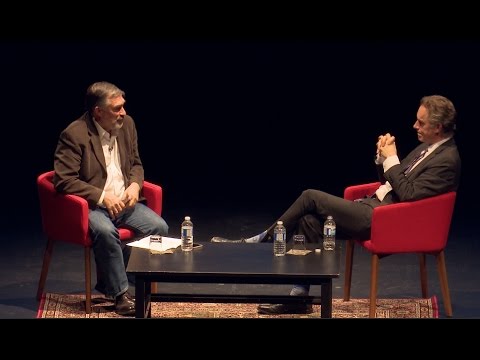
Gore Vidal on writing
Stillness is the key
No plot? No problem
BRIGADOON READS | BOOKS ON WRITING
Dear Shareholder: The best executive letters from Warren Buffett, Prem Watsa, and other great CEOs - Lawrence A. Cunningham
Ernest Hemingway on Writing - Larry W. Phillips
On Writing: A Memoir of the Craft - Stephen King
Pity the Reader: On Writing With Style - Kurt Vonnegut
Nobody Wants to Read Your Sh*t: Why That Is And What You Can Do About It - Steven Pressfield
BRIGADOON EVENTS
Brigadoon April Call | Less Logic. More Magic.
Rory Sutherland - Vice Chairman @ Ogilvy UK
April 21, 2021
Brigadoon May Call | The Poetry of Leadership
Fateme Banishoeib | heARTist + Founder @ ReNewBusiness
May 19, 2021
Brigadoon June Call | Adventures with Fiat Pandas + Autogrills + Negronis
Matt Hranek | Founder + Editor @ Wm Brown Magazine
June 16, 2021
More details and passes - click here.
Thanks for supporting Brigadoon. See you next week.
-Marc
Curation + commentary by Marc A. Ross | Founder + Chief Curator @ Brigadoon
Brigadoon is always powerpoint free and conversation-driven for better insights and connections.
More @ thebrigadoon.com
Why be a Brigadoon Member?
+ Business intelligence
+ Extraordinary networking
+ Global street smarts
+ You'd be a great addition

The Deck | Q4 2020
The Deck is a quarterly rundown of the emerging issues shaping commerce + culture.
The Deck is sent via email exclusively and first to Brigadoon Members at the Patron + Professional levels at the end of each quarter.
