Art Auctions Data Points

39a5c0ac-20e9-42cf-9a57-bdb7188a8e58.jpg

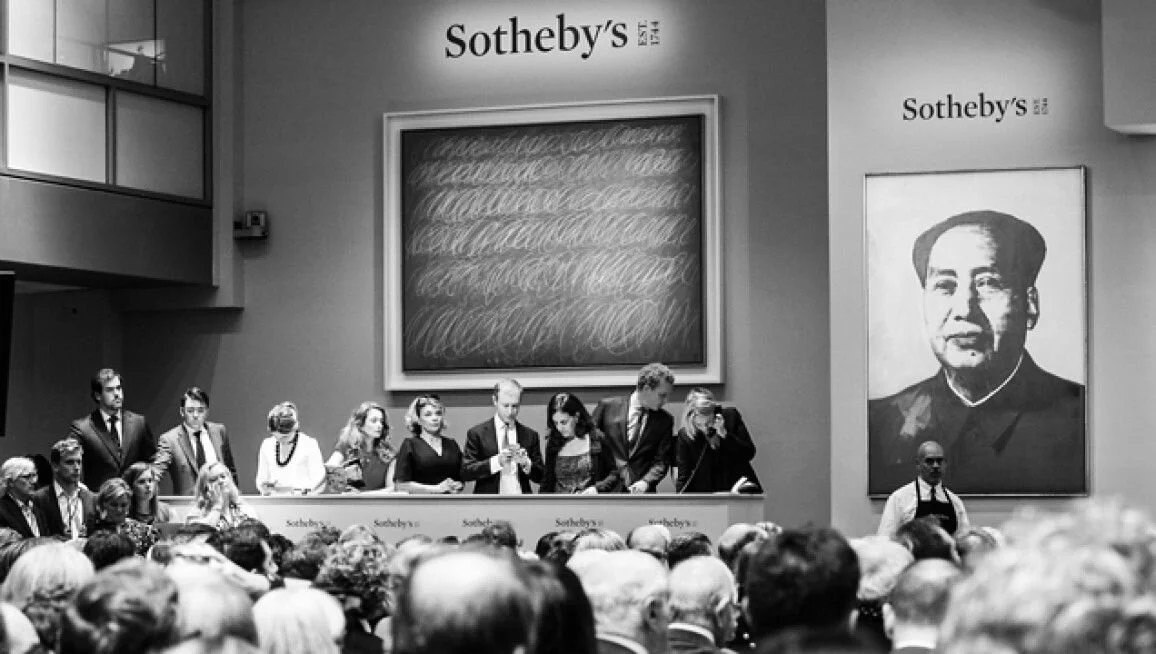
The fine art auction business has remained a duopoly over its 250-year history. The industry is dominated by Sotheby's and Christie's Inc. Curiously, neither competitor has been able to overtake the other by a notable margin despite the clear network effects of this platform business.

Global sales: Showing a second consecutive year of positive growth, the global art market in 2018 reached $67.4 billion, up 6% year-on-year. This brings the market to its second-highest level in 10 years, with values advancing 9% over the decade from 2008 to 2018.

Sales at public auction of fine and decorative art and antiques reached $29.1 billion in 2018, up 3% year-on-year. Works of art selling at prices in excess of $1 million accounted for 61% of total sales value in the fine art auction market in just 1% of lots.

North America held the highest share of the global art market, with Europe placing second. The United States was again the largest market by value with an estimated market share of 44%, up 2% in 2018. Sales reached $29.9 billion in 2018, their highest recorded level to date.

Art fairs: Art fairs continue to be a central part of the global art market, with aggregate sales estimated to reach $16.5 billion in 2018, up 6% year-on-year. The share of the total value of global dealer sales made at art fairs has grown from less than 30% in 2010 to 46% in 2018, stable year-on-year

Online sales: The online art market reached an estimated new high of $6 billion in 2018, up 11% year-on-year. This represents 9% of the value of global sales. Online sales gathered pace at the major auction houses in 2018, while second-tier houses reported making 19% of their annual sales online, with 74% through third-party platforms.

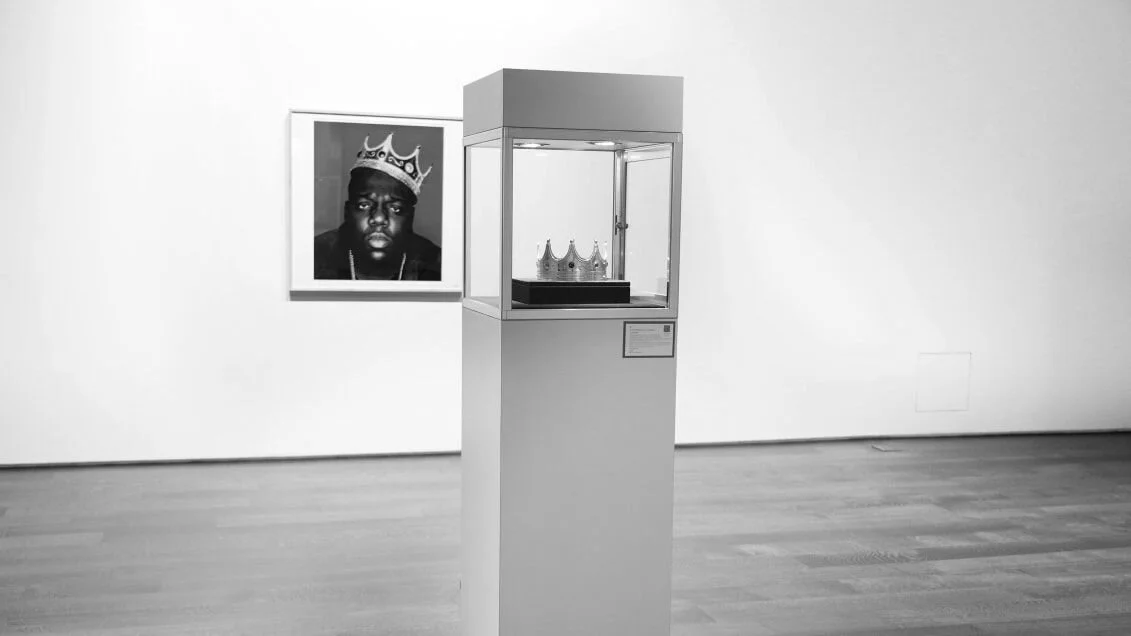
A plastic crown worn by rapper Biggie during a photoshoot just days before his murder has sold at auction for $594,750 in New York. The crown headlined Sotheby's first-ever sale devoted to hip hop that featured more than 120 lots including jewelry, art, and other ephemera of the genre born in the Bronx.

In December 2020, Sotheby's will auction off a pair of Air Jordan worn by Michael Jordan during the 1991 NBA finals. Jordan himself wore and signed (twice) these black sneakers. They come from the personal collection of a former Nike executive called Sonny Vaccaro. The Air Jordan High Top Sneakers could fetch between $500,000 and $700,000 and could become the most expensive sports shoes in history. A pair of Air Jordans 1 Chicago sold for $615,000 dollars in August 2019 at Christie's, setting a new record for the basketball legend.

@Banksy: "The urge to destroy is also a creative urge" - Picasso

#ArtAuctions #BrigadoonWeekend

The CIA is in a battle for talent, and a lack of diversity isn't helping

pablo (1).png

"first streaming ad in Agency's history launched to recruit Americans to join CIA"

In a first for the American espionage agency, the Central Intelligence Agency (CIA) launched paid advertising on streaming and social media platforms this June to recruit intelligence officers. This first of a kind advertising effort by the agency is an effort to be more competitive with higher-paying corporate jobs and add more Americans from minority backgrounds.

In 2019, the CIA launched an Instagram account, highlighting the diversity of its workforce. One post profiled a CIA staffer who grew up homeless; another who sports extensive body art. Black and lesbian CIA employees describe a career in an agency once synonymous with men who found a grey flannel suit an aggressive style choice.

The current CIA Director Gina Haspel, America's first female spy chief, said in a statement announcing the advertising campaign that it was "an important step forward to reach talented Americans with the diversity of experiences we require." In a nod to the time, the CIA accelerated the commercial effort as more people are at home watching television and surfing the net due to COVID social distance practices.

The focus of the CIA's recruitment push is a recognition that the agency's success depends crucially on its intelligence officers' quality. Their ultimate mission is human intelligence (HUMINT) and the personal skill of recruiting assets, accessing state secrets, and collecting analysis on which the US Government relies to make decisions.

The CIA does not publish its workforce demographics. Still, a 2015 agency report revealed that African Americans counted for little more than 4 percent of its senior ranks. Both absolute numbers and proportions of those in senior levels had declined during the preceding decade.

According to the most recent annual demographic report compiled by the Office of the Director of National Intelligence, diversity has been increasing across the American intelligence community - although its demography isn't representative of the US population in general.

Women comprise 38.8% of staff across the 17 agencies in the US intelligence community and 41.2% of new hires.

Also, with Amazon expanding in NoVa and building a gleaming HQ across from the Pentagon, the CIA faces an even greater struggle to attract and keep workers whose wallets can be filled with better salaries in the private sector.

The "Discover the CIA: Your Nation is Counting on You" paid media campaign includes 90-, 60-, and 15-second versions. The effort running nationally on multiple platforms is just one tool to reach their target audience. Having a workforce that looks like America is an additional tool the CIA needs to add to their spycraft tool-chest.

-Marc | Founder @ Brigadon

Art Auctions Deep Dive

759049a0-b26e-4f6c-b27c-03b75ac1360e.jpeg

A beginner's guide to art auctions: Auctions are the art world's blood sport, with wealthy collectors and art speculators convening in tony salesrooms to compete with one another for the finest works coming to market—providing delight for the rows of onlookers who attend the events to watch the action.
+ Andrew M. Goldstein

How does an art auction work? Art auctions attract global attention with their glittery A-list collectors, bidding wars, and unexpected events such as artworks shredding right in front of bidders’ eyes. But behind the glamour and drama sits a serious business, centuries of history, and practices that consistently set the tone for the art market at large. Here’s your guide to everything that happens before the inevitable ‘Sold!’
+ Singulart Magazine

Auction houses: House pride: The art world is changing faster than Sotheby’s and Christie’s are adapting their business model.
+ Economist

Sold to the highest bidder: Why Sotheby’s is going private: Going once, going twice … sold for $3.7 billion dollars. As a legendary auction house, Sotheby’s prepares to go private, a slew of new opportunities beckon. They include the financial flexibility and the necessary confidentiality to go after bigger business deals; tapping into expanding global markets and the use of advanced technology that could help Sotheby’s fetch the best prices by matching collections with art lovers’ preferences.
+ Knowledge @ Wharton

Sotheby’s and Christie’s look to luxury as a coronavirus antidote: The world’s two biggest auction houses are selling more watches, jewelry, and handbags, but art’s still where the money is.
+ Scott Reyburn

Meet Aurel Bacs, the man who sparked the vintage watch boom: Why are classic timepieces suddenly more sought-after, more Instagrammed, and more valuable than ever before? The answer has a lot to do with auctioneer extraordinaire Aurel Bacs.
+ Cam Wolf

Art speculators bid to lose: David Geffen, Peter Brant, and other collectors pledge to bid on the art they want but new third-party backers aim to reap fees by getting outbid; ‘they don’t know what they’re doing.’
+ Kelly Crow

"Increasingly, the goal is to earn a quick payout from the fees surrounding guarantees rather than to bring home any actual paintings. New investors, many from real-estate and international finance, have discovered the guarantee and want to reshape it into a financial instrument entirely distinct from collecting art, with its own margins and strategies. All of this is roiling the houses and old-guard collectors, with some warning that the new generation is propping up the art market."

Sale of rare Nazi-era Porsche sputters after Sotheby’s auction blunder: The bidding for the Porsche Type 64, built by Ferdinand Porsche in 1939, was supposed to open at $13 million but instead started at $30 million. The one-of-a-kind Porsche, built for an unrealized road race on Germany’s new autobahn, through the Austrian Alps to Rome, failed to sell and the auction was halted. “As bidding opened on the Type 64, increments were mistakenly displayed on the screen, causing unfortunate confusion in the room,” RM Sotheby’s said in a statement on Sunday. “We take pride in conducting our world-class auctions with integrity and we take our responsibility to our clients very seriously.” It did not name the auctioneer.
+ Neil Vigdor

"The biggest secret in the art world is that no one knows what's contemporary art!" -- Holger Liebs - Art critic + former editor-in-chief of Monopol magazine