Brigadoon Daily Rundown = April 8, 2020

Newspaper.jpeg

A historian looks ahead at a transformed post-pandemic world: NPR's Lulu Garcia-Navarro talks with Yuval Noah Harari about what happens once COVID-19 is beaten. https://n.pr/2RhoA0P

AP: Insider Q&A: ‘Everyone will suffer’ from US-China spat https://bit.ly/3aNDHa9

"The United States and China together comprise as much as 40% of the global economy. If US-China relations continue to deteriorate, everyone will suffer. In both countries, there is a danger that excessive nationalism or protectionism will distract us from pragmatic solutions to real problems. It would be helpful if both sides took measures to restore trust within the world’s most important bilateral relationship."

Melanie Phillips: West can no longer turn a blind eye to China: Beijing must be called to account after this crisis for its lies about the spread of coronavirus. https://bit.ly/3aNoF3X

Shannon K. O'Neil: How to pandemic-proof globalization: Redundancy, not reshoring, is the key to supply chain security. https://fam.ag/2yDn2Yz

Stretching the international order to its breaking point: The greatest error that geopolitical analysts can make may be believing that the crisis will be over in three to four months. https://bit.ly/34b1azx

Steve LeVine: How the Black Death radically changed the course of history: And what that can teach us about the coronavirus’ potential to do the same. https://bit.ly/3aXtoAt

What do futurists imagine for the post-coronavirus-pandemic world? There's no doubt that the coronavirus pandemic has changed daily life. But what changes will last? How will we live when it's all over? DW asked futurists for their visions of life after COVID-19. https://bit.ly/2x1JD0l

Reporting for coronavirus duty: Robots that go where humans fear to tread: A robotic army is being deployed in the virus fight to radiate surfaces, sanitize floors, scan for fevers and enforce mask-wearing. https://on.wsj.com/2Rgt9s6

Chris Fussell: We need to link local leaders directly to one another: A strategy that helped Americans defeat al-Qaeda could be the key to stopping the coronavirus. https://bit.ly/2V0PX0c

"This pandemic presents an incredible challenge for our nation, but we’ve learned previously how to defeat a problem like this. Agency and state bureaucracy will help us make sound and structured decisions, but it’s impossible to move key insights and raw intelligence through traditional means alone. The doctors, nurses, and first responders who are in this battle each day deserve every solution we can possibly offer. Minutes count. They need a network."

Chris Fussell is a former US Navy SEAL and the president of McChrystal Group.

Americans turn to technology during COVID-19 outbreak, say an outage would be a problem: Amid this increased reliance, about nine-in-ten US adults (93%) say that a major interruption to their internet or cellphone service during the outbreak would be a problem in their daily life, including 49% who foresee an outage being a very big problem for them and 28% who believe it would be a moderately big problem. https://pewrsr.ch/3dMwEjE

Working from home was supposed to be heaven. It’s hell — and the author of ‘Eat Sleep Work Repeat’ knows why. https://wapo.st/3bUSu2N

The most popular words in real estate listings: ‘Open floor plan.’ ‘Granite countertops.’ ‘Vaulted ceilings.’ Here are the words and phrases that most often lure us to property listings. https://nyti.ms/3dZqi0H

The loneliness of the “social distancer” triggers brain cravings akin to hunger: A study on isolation’s neural underpinnings implies many may feel literally “starved” for contact amid the COVID-19 pandemic. https://bit.ly/2xMaiyw
Brigadoon Daily Rundown = April 7, 2020

Eyes.jpeg

Inside the secretive group trying to bring down North Korea’s regime: A US-based activist successfully made cracks in Kim Jong Un’s regime—until mishaps sent his group into hiding. https://on.wsj.com/39IaFap

Channel 4: Explained: Sweden’s no-lockdown approach to coronavirus https://bit.ly/39MU9pN

Niall Ferguson: Let’s Zoom Xi Jinping. He has questions to answer about coronavirus: To halt the spread of viral disinformation, China must be put on the spot. https://bit.ly/2Xczh8P

Henry Kissinger: The coronavirus pandemic will forever alter the world order: The US must protect its citizens from disease while starting the urgent work of planning for a new epoch. https://on.wsj.com/2wl6pAa

John Authers: When plagues pass, labor gets the upper hand: For centuries, pandemics have been followed by slower growth and social unrest. https://bloom.bg/2JH75Tt

Why CMOs never last https://bit.ly/2QZrFCJ

How pets are helping us through the coronavirus crisis: Animals are proving a lifesaver for many, providing companionship and consistency in uncertain times. https://bit.ly/2R5xL4w

Daniel Akst: Yes, Henry David Thoreau was an industrial innovator https://buff.ly/2WwaVTY

Brigadoon Daily Rundown = April 6, 2020

Cow.png

Crisis Revisited: Brunswick group CEO Neal Wolin on lessons from 2009. https://bit.ly/2R5Kkg2

“deep knowledge and excellent judgment helped us … pass tough new Wall Street reform, strengthen our financial system, foster growth here at home, and promote economic development around the world.”

Alastair Campbell: Boris Johnson needs to learn from Andrew Cuomo: Britain’s prime minister needs a new communication strategy — and fast. https://nyti.ms/2JBwVrT

High-tech ghost ships will set sail sans sailors: Maritime technology groups are building robotic vessels to cross the oceans. https://bit.ly/39F9FE1 

Richard Waters: Can data save us from coronavirus? Big data and machine learning should be helping contain the pandemic — but their usefulness has been limited. https://on.ft.com/39LnCk0 

How the coronavirus is shaping the 2024 presidential race: The crisis is stocking the Democratic Party’s pipeline of prospective candidates for years to come. https://politi.co/2UCQUgf 

'Predictably Irrational' author says this is what investors should be doing during the pandemic https://bit.ly/3aE49md 

Sometimes the best thing to do is nothing. 

And according to Duke University behavioral economist Dan Ariely, nothing is exactly what most investors should do during the coronavirus outbreak. 

NASA brings back its iconic ‘worm’ logo for upcoming Falcon 9 Crew Dragon launch: NASA is officially bringing back its iconic “worm” logo from the 1970s for SpaceX’s upcoming Falcon 9 Crew Dragon launch, NASA administrator Jim Bridenstine announced today on Twitter. The organization is seeking to “mark the return of human spaceflight on American rockets from American soil.”

Check out the NASA graphics standards manual https://go.nasa.gov/2UCVrzd

‘It’s the recession on steroids’: Why brands need to think long-term amid the coronavirus pandemic: The natural reaction to a crisis is to hunker down and protect short-term profitability, but with demand for most brands either through the roof or through the floor, marketers must look longer term if they possibly can. https://bit.ly/2Uu6kU1  

Coronavirus and mental health: 'We are not made for social isolation': Wash your hands, keep your distance, be flexible: This is difficult for many, but for people with mental illnesses it is a huge problem. We fear for our lungs — and forget the most vulnerable among us. https://bit.ly/2R2EwnC 

A simple exercise to help stay calm in the face of coronavirus uncertainty: As the pandemic continues to change, Martin Seligman, director of Penn’s Positive Psychology Center, offers a quick and straightforward way to refocus the mind. https://bit.ly/2UTS0Do 

Hunter Felt: How the LA Rams' new logo managed to anger an entire fanbase: With the rest of the sports world on hold, the Los Angeles Rams had a news cycle all to themselves last week. Unfortunately, it had nothing to do with football. https://bit.ly/3aHsQyb 

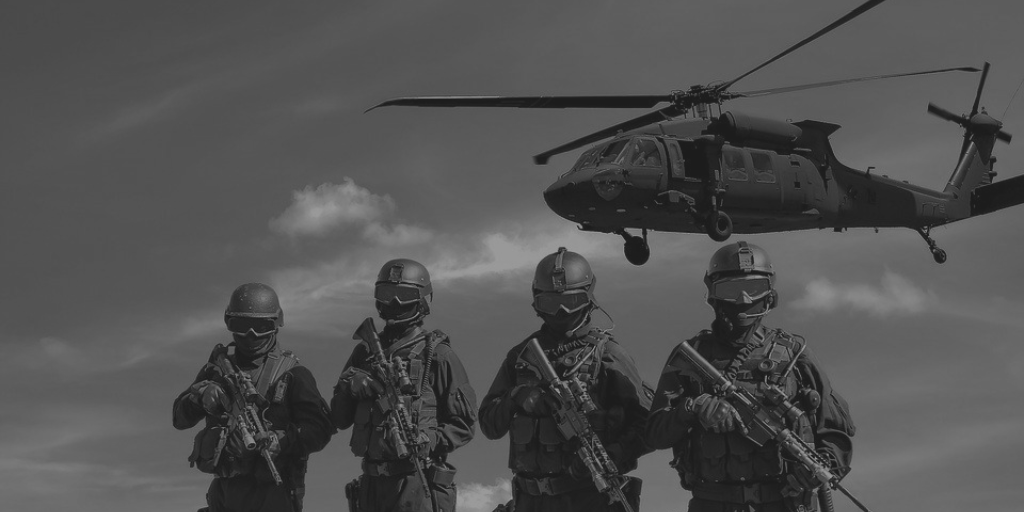
Are we really fighting coronavirus ‘like a war’?

Army.png

What would conducting an actual war against COVID-19 look like? 

Right now, with the variety of policies in this or that state, our daily doses of mixed messages from politician driven press conferences, and persisting questions about overall strategy, it still feels more “wannabe” war than full-bore fight. 

What would it be to get deadly serious now? 

Brook Manville posed this question to retired General Stanley McChrystal.

In his wide-ranging conversation with McChrystal, the former military commander now entrepreneur businessman provided seven insights: 

1. War means everyone accepting real sacrifice

2. Develop and agree to a strategy free of politics

3. The strategy has to be “all-in”

4. Federal Leadership must take the broader view

5. In a war, leaders owe special respect to each other, to followers and to partners

6. Shift messaging towards a challenge-based narrative of the ongoing strategy

7. The best strategy for a coronavirus war will build a broad network of learning and action

You can read the full article here: https://bit.ly/2JCPagM