
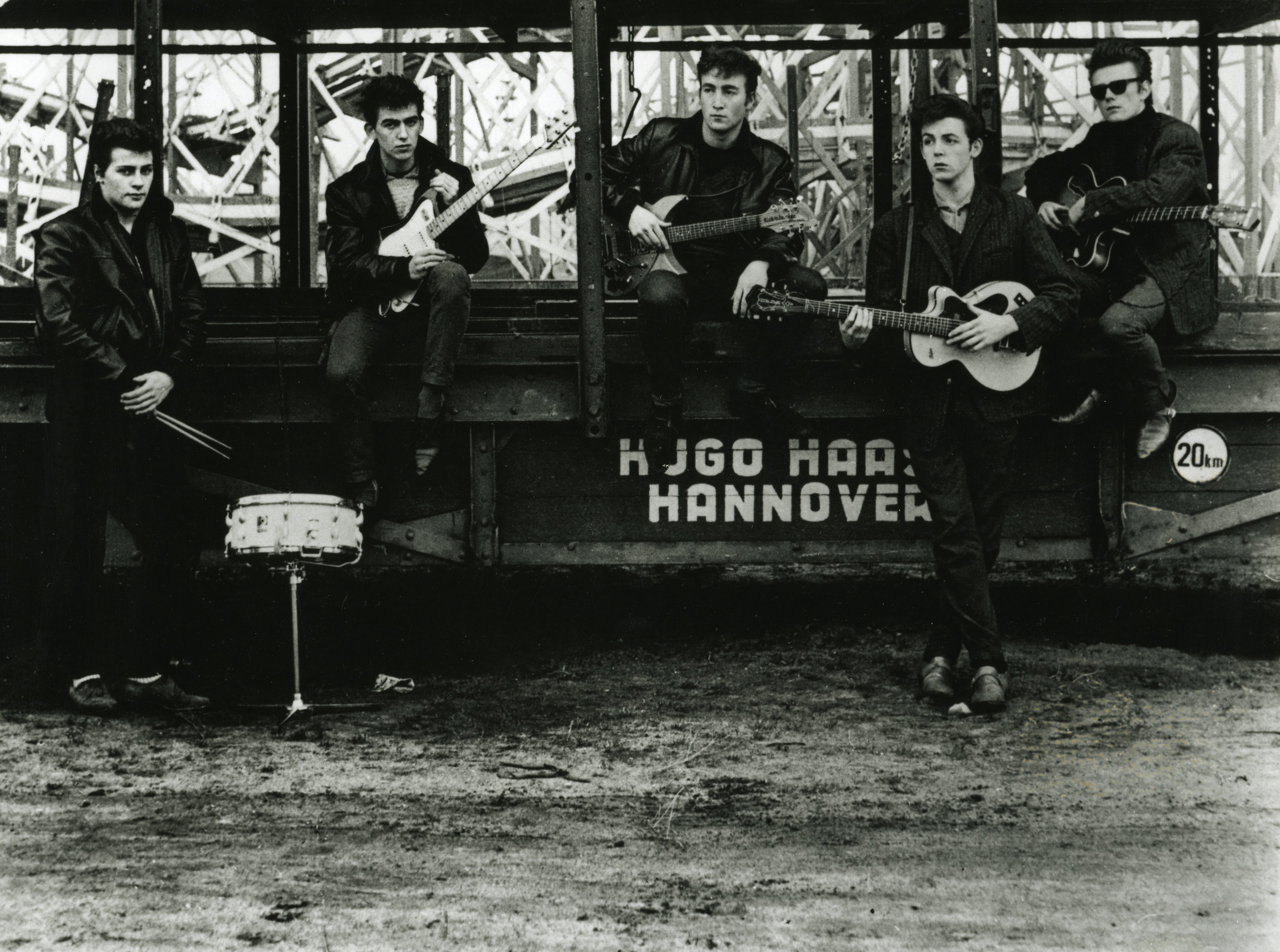
The Beatles might have hailed from Liverpool, but the band got its big break in Hamburg.
The band had secured a bid to play the Indra, a seedy strip joint complete with a neon-lighted elephant beckoning the passersby in Hamburg's infamous red-light boulevard.
This August marks the 50th anniversary of the Beatles' debut of a 48-night stint at this "musical venue."
The band’s contract required the five of them (John, Paul, George, drummer Pete Best and bassist Stuart Sutcliffe) to perform for 30 hours, six nights a week. Each one received the generous sum of about $51 in those days.
The Indra’s owner was generous and provided the group free lodging.
The Beatles slept behind the stage in two dark, dank, cramped storage rooms with small beds, folding cots, and a couch. The nearby men’s room, where broken toilets often overflowed into their rooms, served the group’s personal hygiene needs.
The days of Hamburg are a far cry from Paul McCartney's concert riders of today.
McCartney now has an amusing list of plant demands - yes plant demands: "No trees please! We want plants that are just as full on the bottom as the top such as palm, bamboo, peace lilies, etc. No tree trunks!"
Also, of course, the rider requires a pre-show sweep by some bomb-sniffing dogs.
Paul has come a long way from a pre-show neon-lighted elephant.
However, playing Hamburg was essential to the band's success.
After two months of incessant playing, Indra's owner Bruno Koschmider promoted The Beatles to his flagship club, the Kaiserkeller.
“We had to learn millions of songs because we’d be on for hours,” George Harrison later said. “Hamburg was really like our apprenticeship, learning how to play in front of people.”
This apprenticeship, learning millions of songs, and how to properly play in front of people was essential.
Where is your Hamburg?
Where is the place you can work on your craft, build your skills, and harness your talents regardless of the environment?
Make a decision

"You never know when a typical life will be anything but, and you won’t know if you are rewriting history, or rewriting the future until the writing is complete."
This quote is from Debbie Millman in her book Look Both Ways: Illustrated Essays on the Intersection of Life and Design.
It's a good reminder that to make a decision, to make a start, to get going.
You won't know what the impact is or what transpired until the work is complete.
However, without the start, you'll never know when a typical life will be anything but.
Being a noun vs. being a verb

“I am the Vice President of Sweet Tooth Vending Machines.”
“I am the Chief Marketing Officer for Acme Lollipops.”
“I am the General Manager of Candy Wrappers.”
These are all examples of being a noun.
These are statements for people who are telling what they are.
These people are nouns.
These are not statements for people who are telling you what they are doing.
“I am producing film.”
“I am innovating of grass turf.”
“I am solving medical challenges in the inner cities.”
These are statements for people who are telling what they are doing.
These people are verbs.
These are not statements for people who are telling you what they are.
Don’t always be a noun; embrace being a verb.
The new way to win a Nobel Prize

It used to be that to win a Nobel Prize, it was a lonely and solo pursuit. That's not the case anymore. Over the last 15 years, almost every Nobel Prize won in economics and physics is by groups of people collaborating around the world.
The way great culture and commerce changing work gets done these days is not an individual activity but by group effort where geography or languages do not restrict harnessing skills, insights, and talents.