
Summer Reading List, Detroit, Alibaba v. Tencent, Robot Belt
The Weekly | Brigadoon
June 24, 2018
Curation and commentary from Marc A. Ross
Reporting from Alexandria, Virginia
The Weekly = Enterprise + Culture + Sport + Policy
Brigadoon is Education + Events + Engagement for Entrepreneurs and Thought Leaders.
Subscribe here: http://thebrigadoon.com/subscribe/
ROSS RANT
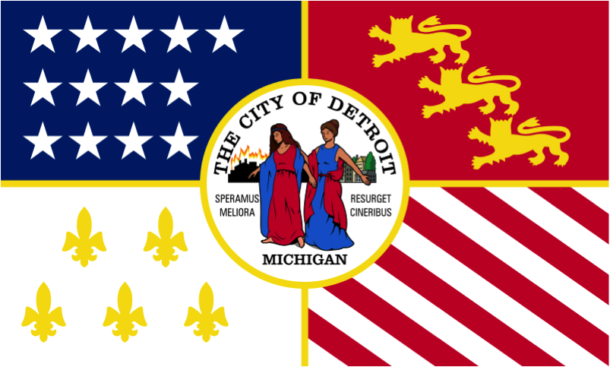
Detroit has long been at the forefront of innovation and responsible capitalism
Detroit has been at the cutting edge of engineering and manufacturing innovation for over 100 years. In 1903, Henry Ford famously founded the Ford Motor Company and made exceptional use of the assembly line, unlike anything the world had seen before. In addition to other automotive pioneers such as William Durant, the Dodge Brothers, Henry Joy, and Walter Chrysler, Detroit was established as the clear global automotive capital. The growth of the auto industry was felt far beyond Detroit. Businesses around the nation created garages to service vehicles and gas stations to fuel up cars, as well as the building numerous factories to make auto parts, glass windows, and rubber tires. Furthermore, this multi-state, multi-plant ecosystem was a precursor to the complex global supply chains that we all benefit from today. Without the innovations created in Detroit over a century ago, raw commodity products sourced anywhere in the world could not be efficiently designed into user-friendly jackets, automobiles, smartphones, or jumbo-jets. It is not a stretch to say without Detroit our modern wouldn’t exist and wouldn’t be as efficient.
With Detroit’s success as an innovate engineering and manufacturing city, companies were able to take advantage of their economic windfalls and be responsible capitalists. In 1914, Ford announced that it would pay its factory workers a minimum wage of $5 per eight-hour day. The news shocked many in the auto industry as $5 per day was nearly double what the average auto worker made. In 1926 the company went a step further, as the company adopted a five-day, 40-hour work week for workers in its automotive factories. Henry Ford said of the decision: “It is high time to rid ourselves of the notion that leisure for workmen is either ‘lost time’ or a class privilege.” Both moves were brilliant management as productivity immediately boosted. These two steps of fair wages and more time off have become ubiquitous globally and now impact every sector of the economy.
As the fourth-largest city in the American Midwest and the largest city on the United States–Canada border, Detroit is positioned well for the future. As a standalone economy, Detroit’s economy is more extensive than Chile and would easily be one of the world’s largest economies.
Today there are over 100 technology startups who call Detroit home. As Recode reports, in 2014, for the first time, there was more venture capital activity in Detroit than Ann Arbor, home of the University of Michigan. According to national education data analyzed by Anderson Economic Group, 10,000 STEM degrees are awarded annually around the Detroit region, which is more than Silicon Valley and nearly 15 percent of Metro Detroit jobs are already in technology.
The city of Detroit is built to succeed in the new post-employment environment because of the city’s history of maximizing cultures and geography as well as building upon its innovation and responsible capitalism leadership.
It is not a stretch to say without Detroit our modern world wouldn’t exist and wouldn’t be as efficient. So the next time someone tells you Detroit isn’t working, say Detroit is succeeding and impacting their life positively daily.
Also, look back to the Detroit flag and note the two Latin mottos. One which reads Speramus Meliora and the other Resurget Cineribus, meaning “We hope for better things” and “It will rise from the ashes.”
With these mottos powering the city, I believe Detroit is well positioned to resume its claim as one of the world’s great cities. No one should underestimate the energy and the drive which has been unleashed just four years after declaring bankruptcy. Not only is this remarkable, but Detroit should be inspiring to other cities who can see a path on how to adjust to new global competitive challenges and opportunities.
I owe a lot to the city of Detroit. It is my birthplace and it is the city I call home.
It provided employment for my grandfathers so they could build a better life for me generations later.
It is gritty. It is sprawled. It is down. It is up. It is bold.
Detroit is entering a new stage of passion and growth to support future generations
-Marc A. Ross
Marc A. Ross is the founder of Brigadoon and specializes in developing winning communications, content, connections, and commerce for entrepreneurs and thought leaders.
READING LIST
Here's your summer reading list: 21 suggestions from the Brigadoon community
Shakespeare, Jesus, Gucci, Marco Polo, and Mao to name a few of the subjects suggested.
Happy reading.
1. Will in the World: How Shakespeare Became Shakespeare - Stephen Greenblatt
2. Zealot: The Life and Times of Jesus of Nazareth - Reza Aslan
3. Clashing Over Commerce: A History of US Trade Policy - Douglas Irwin
4. Talking to the Dead: A Novel Paperback – Harry Bingham
5. In the Name of Gucci: A Memoir Hardcover – Patricia Gucci
6. Thinking, Fast and Slow - Daniel Kahneman
7. Enlightenment Now - Steven Pinker
8. Off the Clock: Feel Less Busy While Getting More Done Hardcover – Laura Vanderkam
9. The Ambition Decisions: What Women Know About Work, Family, and the Path to Building a Life - Hana Schank and Elizabeth Wallace
10. Seven Brief Lessons on Physics - Carlo Rovelli
11. Word by Word: The Secret Life of Dictionaries - Kory Stamper
12. Never Lose A Customer Again - Joey Coleman
13. The Richest Man in Babylon - George Samuel Clason
14. The Subtle Art of Not Giving a F*ck: A Counterintuitive Approach to Living a Good Life - Mark Manson
15. Against the Gods: The Remarkable Story of Risk - Peter L. Bernstein
16. The Gulag Archipelago, 1918-1956: An Experiment in Literary Investigation - Aleksandr I. Solzhenitsyn
17. The Archipelago: Italy Since 1945 - John Foot
18. Antifragile - Nassim Nicholas Taleb
19. The Return of Marco Polo's World: War, Strategy, and American Interests in the Twenty-first Century - Robert D. Kaplan
20. A World Lit Only by Fire: The Medieval Mind and the Renaissance: Portrait of an Age – William Manchester
21. Mao's Great Famine: The History of China's Most Devastating Catastrophe, 1958-1962 – Frank Dikötter
FIVE ARTICLES TO READ
Alibaba v. Tencent: The battle for supremacy in China: Jack Ma of Alibaba and Pony Ma of Tencent have built tech titans that dominate China's digital economy. Is the world big enough for both of them? https://for.tn/2yvf0k2
Take a look at him now: The many lives of Phil Collins: After an extended hiatus that found him becoming more beloved, the crown prince of middle-of-the-road Top 40 has embarked on a farewell tour. Should he be celebrated as a pop icon or vilified as a grouchy opportunist? http://bit.ly/2lkePyr
Looking for the best links in Scotland? This man played 111 rounds: In A Course Called Scotland, Tom Coyne goes on a two-month-long adventure and comes to grips with a game that’s less than perfect. https://bloom.bg/2lrUc3j
From rust belt to robot belt: Turning AI into jobs in the US heartland: Artificial intelligence is offering an amazing opportunity to increase prosperity, but whether or not we will seize it is our choice. http://bit.ly/2lktc5P
How Europe’s opera houses won over millennials: With an escape game and networking events, La Scala and the Paris Opera are attracting under-30 audiences https://on.wsj.com/2ymUp1b
BRIGADOON EVENTS
Brigadoon Annapolis | Salon Dinner + Lectures = September 20-21, 2018
Brigadoon Detroit | Salon Dinner = October 11, 2018
Brigadoon Cincinnati | Salon Dinner = November 1, 2018
Brigadoon Scotland 2018 = November 11-13, 2018
Brigadoon Sundance 2019 = February 24-26, 2019
More details and ticket information @ thebrigadoon.com
PRODUCTIVITY
@HarvardBiz: You might do your best strategic thinking while taking a short walk
Michael E. Porter+ Nitin Nohria: How CEOs manage timehttp://bit.ly/2tqtz2s
Where and how CEOs are involved determines what gets done. It signals priorities.
CEOs are always on, and there is always more to be done. The leaders in our study worked 9.7 hours per weekday, on average. They also conducted business on 79% of weekend days, putting in an average of 3.9 hours daily, and on 70% of vacation days, averaging 2.4 hours daily.
Seth Godin: The two simple secrets to good ideas
Secret #1 is the biggest one: More bad ideas. The more bad ideas the better. If you work really hard on coming up with bad ideas, sooner or later, some good ideas are going to slip through. This is much easier than the opposite approach.
Secret #2 is more important: Generosity. It's much easier and more effective to come up with good ideas for someone else. Much easier to bring a posture of insight and care on behalf of someone else. It lets you off the hook, too.
TRENDS
European technology worker population growth, 2017:
Ireland: 5.3%
Netherlands: 4.6%
Germany: 4.2%
France: 3.6%
UK: 3.2%
Austria: 2.8%
Norway: 2.8%
Portugal: 2.7%
HT: The State of European Tech
Share of global car market, 2017:
Toyota: 9.2%
Volkswagen: 7.2%
Ford: 6.5%
Honda: 5.4%
Nissan: 5.4%
Hyundai: 4.7%
Chevrolet: 4.4%
Kia: 3%
Renault: 2.8%
Mercedes: 2.7%
Peugeot: 2.2%
BMW: 2.2%
Audi: 2%
Maruti: 1.7%
Mazda: 1.7%
Fiat: 1.7%
Suzuki: 1.6%
Buick: 1.5%
Jeep: 1.5%
HT @spectatorindex
US Census Bureau data:
- America is less white, getting older, and more urban.
- By 2035, Americans age 65 and older are forecast to outnumber kids for the first time.
- Over a million people have left New York since April 1, 2010.
- Columbus is now bigger than Cleveland.
- Phoenix-Mesa-Scottsdale, Arizona is the 11th largest metro area.
- California has the largest Hispanic population at 15.5 million.
- The Asian population, the fastest-growing racial group in the nation, increased 3.1 percent to 22.2 million